
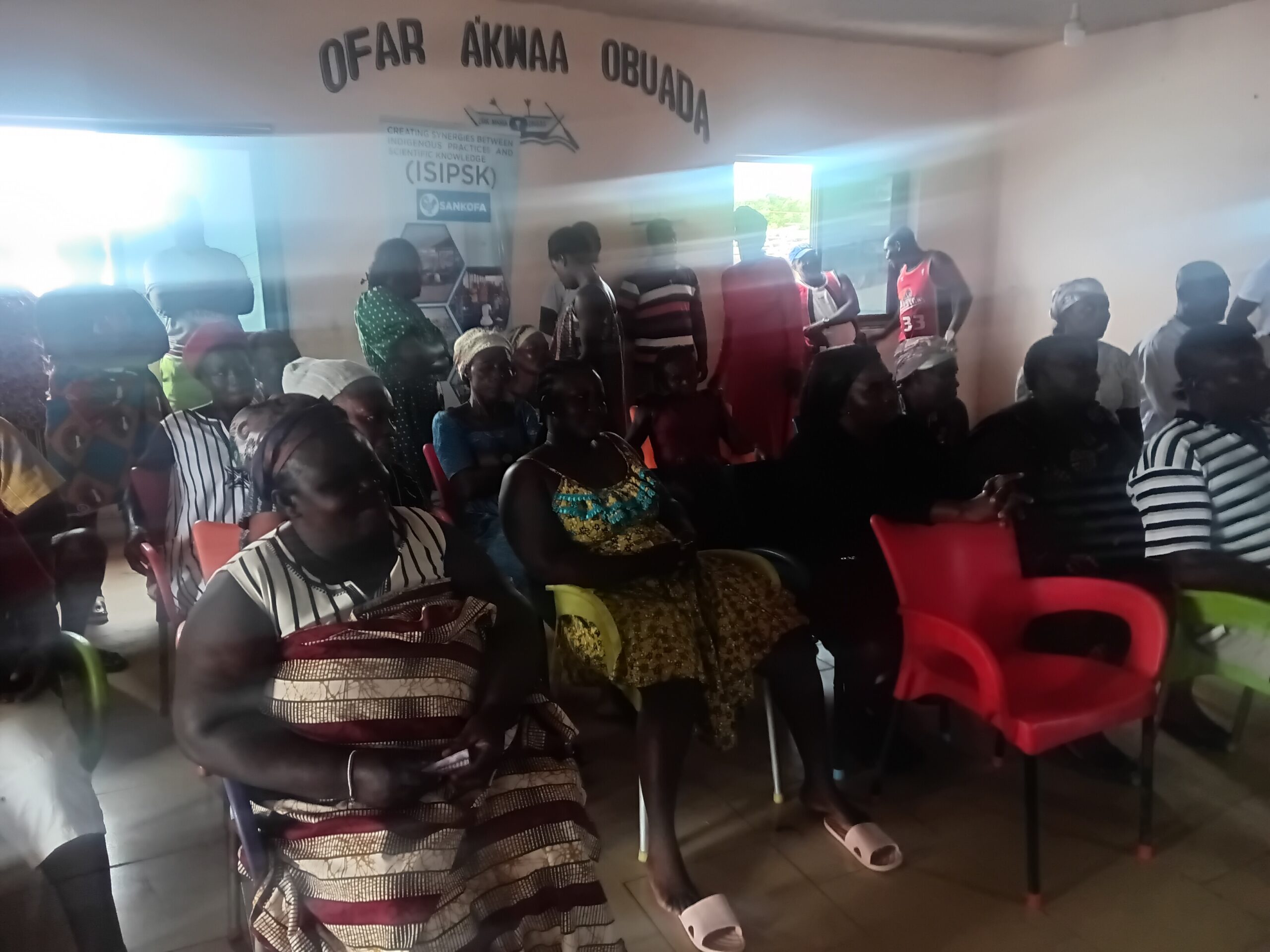
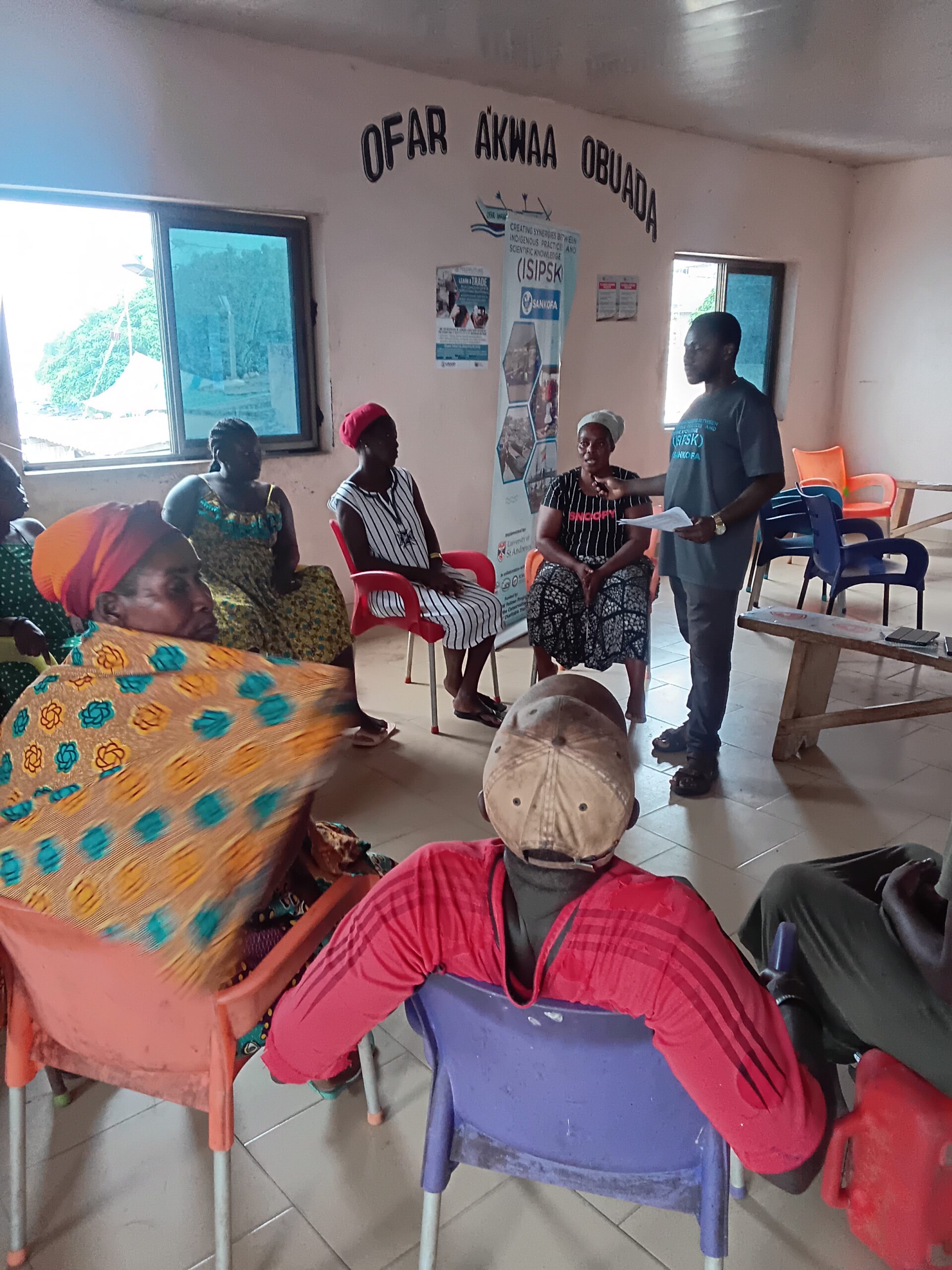
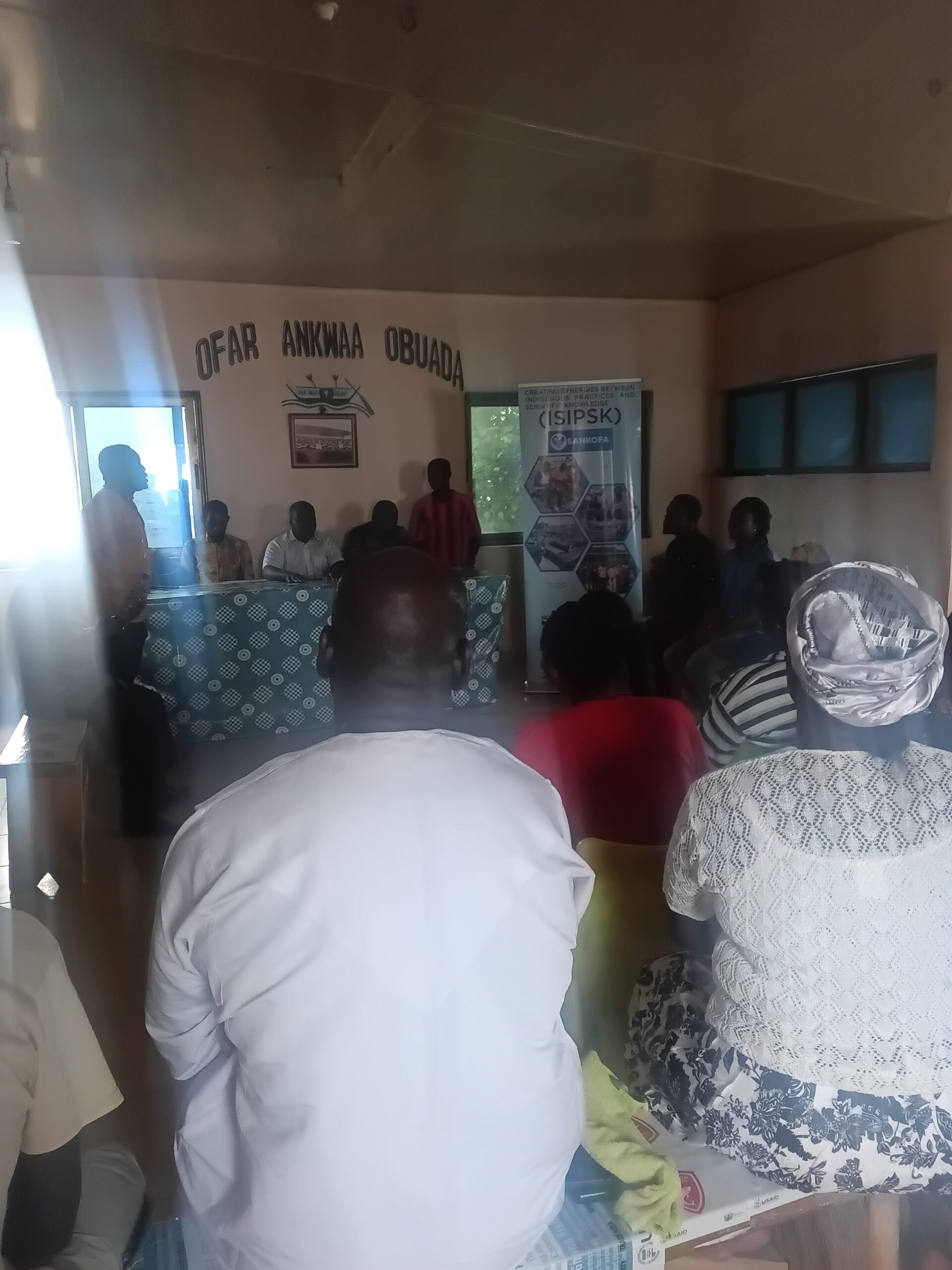
In the third week of July, the team engaged fisherfolk in the Central Region. Data collection exercise focused on Apam, a major fishing community in the Gomoa-West District from 15 to 17 July, 2024. The team’s arrival in the community was heralded by expectant fisherfolk who mentioned that their interest had been piqued by the ISIPSK jingles earlier publicised in the community by the Chief Fisherman. An initial community meeting was held at the landing beach committee conference room used by fisherfolk for meetings. To welcome the team, the council of elders supporting the chief fisherman, fisherfolk including canoe owners, fish processors and traders, and service providers were present to hear the team directly present their mission in the community. After recapping the research background and objectives in the community, the research team took advantage to engage the participants in focus group discussions, having received approval from the fisherfolk leaders.
The Apam community is characterised by a densely populated settlement close to the landing beach and was observed to be complying with the closed season policy. Canoes were berthed along the entire stretch of the landing beach. Some young men were seen mending nets, repairing their canoes or having a casual conversation among themselves. Older fishermen were seen gathered at a net mending shed playing cards and draughts. Some women were seen selling food, and others attending to domestic duties including childcare or cooking. Majority of the fish smoking ovens were idle save for a few that had the billows of smoke emanating from them being used to process some few fish. A cold store located close to the landing beach was seen to be in business as patrons were shuffling to and from it with cartons of frozen fish and other food products.
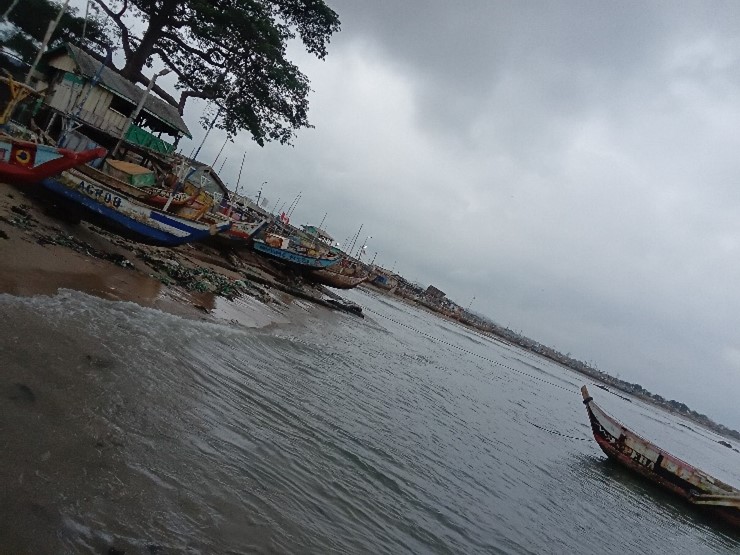
Canoes berthed along the beach observed complying with the closed season in Apam 
Fish smoking ovens in Apam 
Survey with woman fish processor in Apam as she carried on cooking her family’s meal 
The field supervisor engaging an input dealer in Apam at his shop 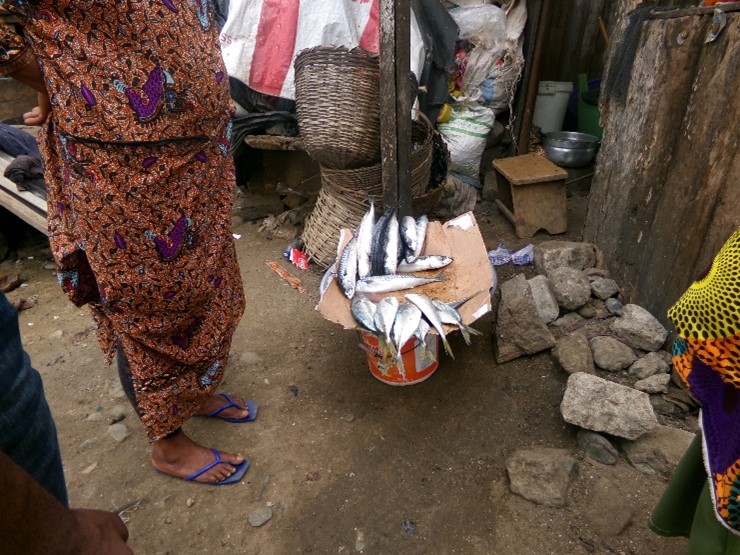
Woman hawking frozen fish purchased from the local cold store in Apam 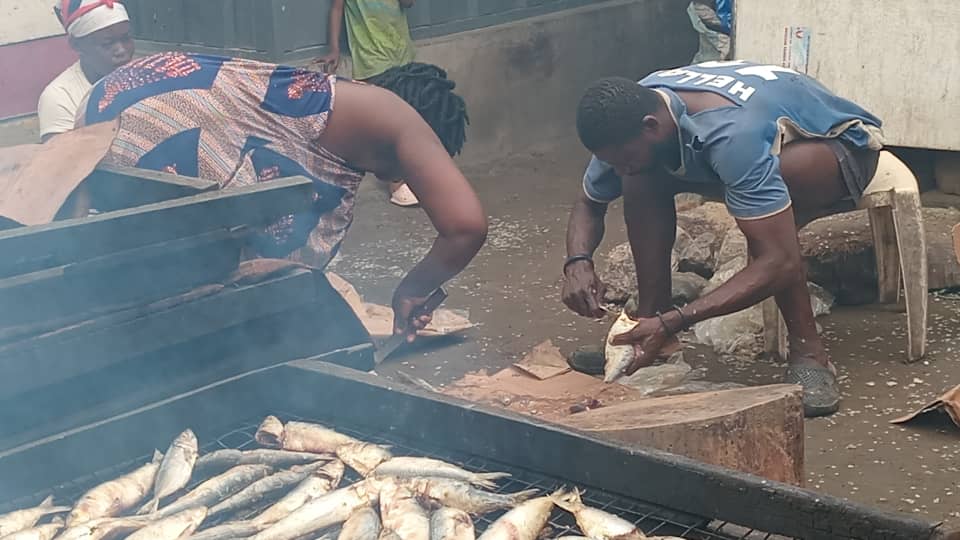
Throughout the three days spent engaging fishers in Apam, the team received positive response from members of the community who keenly participated in the surveys, focus group discussions and key informant interviews. Influential persons among fisherfolk in the community such as members of the chief fisherman’s council of elders, African Confederation of Professional Organisations of Artisanal Fisheries (CAOPA) executive member and opinion leaders among canoe owners shared their knowledge about the gendered impact of the closed season policy and indigenous practices used for marine conservation during their key informant interviews. The team brought its activities to a fruitful close in Apam on 17 July and set off to Cape Coast for the next phase of the data collection in the region.


Fieldwork activities in Cape Coast took place from 18 to 20 July, 2024. Cape Coast is a major fishing community in the Cape Coast Metropolitan District which is comprised of several landing beaches (comparable to suburbs) namely: Ekon, Abrofo Mpoano, Ola and Duakor. Cape Coast fishing community hosts migrant fishers from other coastal towns, thus has a fisherfolk population which is culturally diverse with different ethnic groups. The community is characterised by fisheries livelihoods including fishing, canoe building, fish processing and trading, trading of fishing inputs and petty trading of other necessities. Considering the sub-divisions of Cape Coast fishing community, the team tailored their engagements to reach all the respective landing beaches by splitting the team into two groups to maximise its effort in the community within the three days.
Activities in Cape Coast kicked off with a courtesy call on the Chief fisherman of Ekon landing beach. The courtesy call, in accordance with traditional norms, was to officially introduce the research team and objectives to the Chief fisherman and seek his approval to access the community for the intended activities in his capacity as the leader of fisherfolk. The Chief fisherman warmly received the team and commended their research objective to investigate indigenous practices historically used for marine conservation. After receiving acknowledgement from the Chief Fisherman, the team conducted surveys with fisherfolk and a mixed gendered focus group discussion for canoe owners in Ekon.


Simultaneously, the other half of the team was in Abrofo Mpoano, where a courtesy call was also paid to the Chief Fishermen with his council of elders including a konkohemaa (chief fish processor). Abrofo mpoano is a relatively bigger landing beach compared to Ekon with diverse fishing activities (mainly employing the set net and purse seine – locally called ‘watsa’ gears), fish trading, commercial activities, among others. Abrofo mpoano is situated close to the Cape Coast castle, Ghana’s heritage landmark used for slave trade during the colonial times hence some tourists (Ghanaian locals and foreigners) were seen in the vicinity. Following the courtesy call, the team proceeded to engage fisherfolk in surveys. Focus group discussion with fish processors and traders (all female), crew fishers (all male) and service providers (mixed gendered) were also conducted with fisherfolk in Abrofo Mopoano.
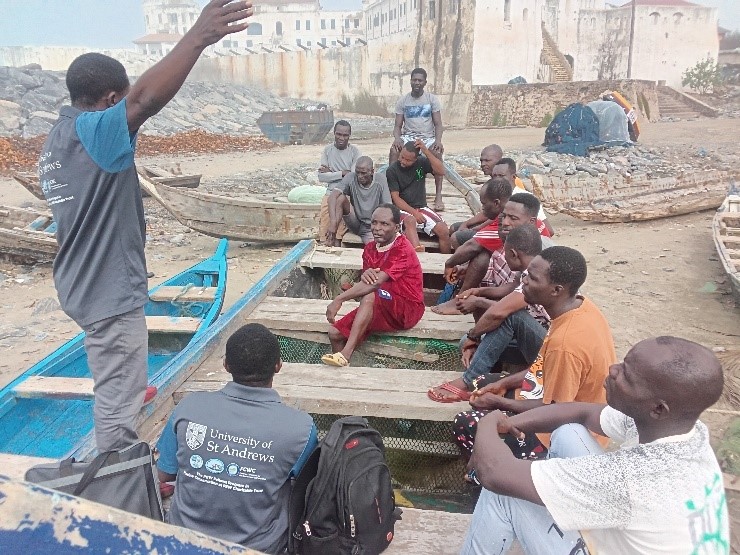
Focus group discussion with crew fishermen in Abrofo mpoano and the Cape Coast castle in the background 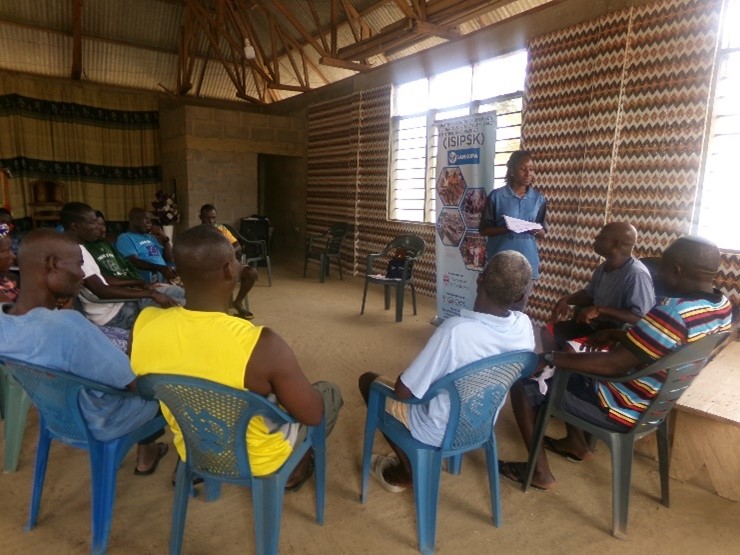
Mixed gendered focus group discussion with canoe owners in Ekon – Cape Coast 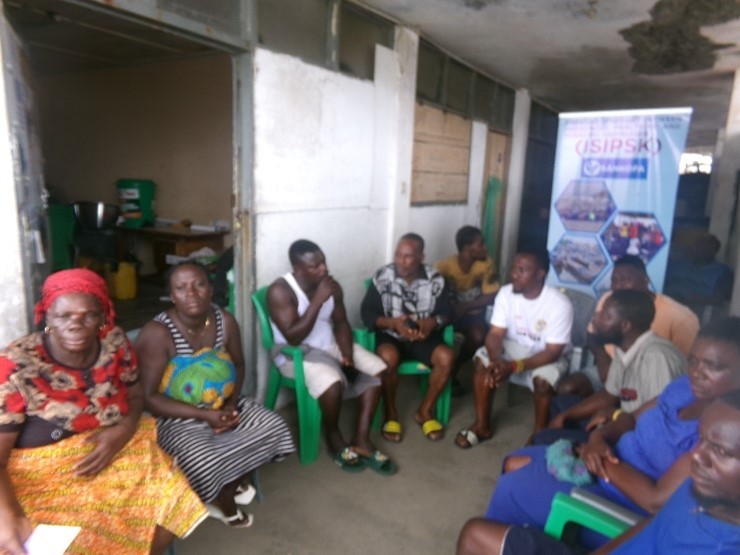
Mixed gendered focus group discussion with service providers and other livelihoods in Cape Coast Abrofo mpoano 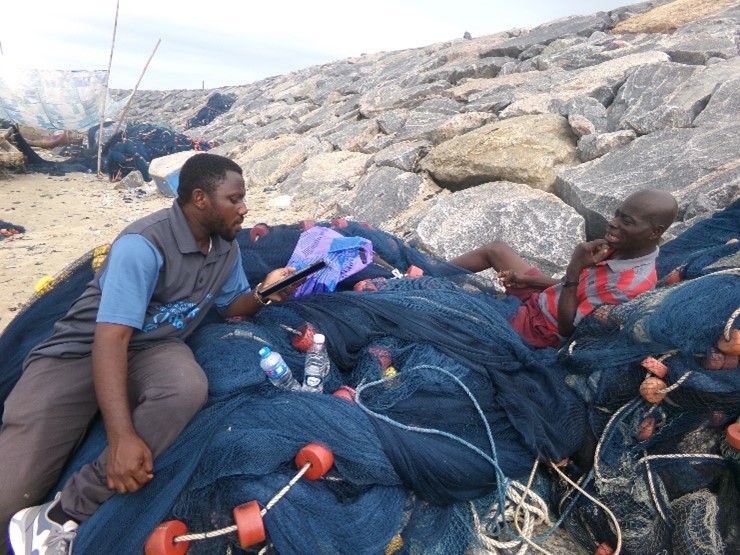
Survey with a fisherman in Cape Coast – Abrofo mpoano
On the third day in Cape Coast, the team extended their activities to Duakor and Ola to engage fisherfolk and opinion leaders (both male and female) in key informant interviews and surveys. Both landing beaches share proximity to the University of Cape Coast, where the coastal strip has been modified by the development of local pubs dotted along the stretch of landing beach. Fisherfolk in Duakor are mostly migrants from the Volta region; Duakor’s fishermen mainly use the beach seine gear and their women are the major fish processors (smoking) and financiers of fishermen in Abrofo Mpoano and Elmina (another major fishing community in the Central Region).
In general, a calm ambience was observed in the four landing beaches comprising the Cape Coast fishing community as fisherfolk in the respective landing beaches were complying with the policy. In Ekon, fishermen were seen assembling a fishing net, and some other men engrossed in a game of draughts during the afternoon. Some women were seen carrying out domestic activities whilst others were selling food items. Some school children who were beautifully adorned in their uniforms and appeared excited were spotted going to school in the morning. In Abrofo Mpoano, fishers were seen mending nets, carrying out maintenance as well as completing works on a refurbished canoe. In Duakor and Ola, fewer fishermen were seen at the landing beaches mending their nets, and activities in these two landing beaches were comparatively lower to Abrofo mpoano and Ekon. In all these, women were reported to be in their residences not too far from the landing beaches carrying out domestic activities.
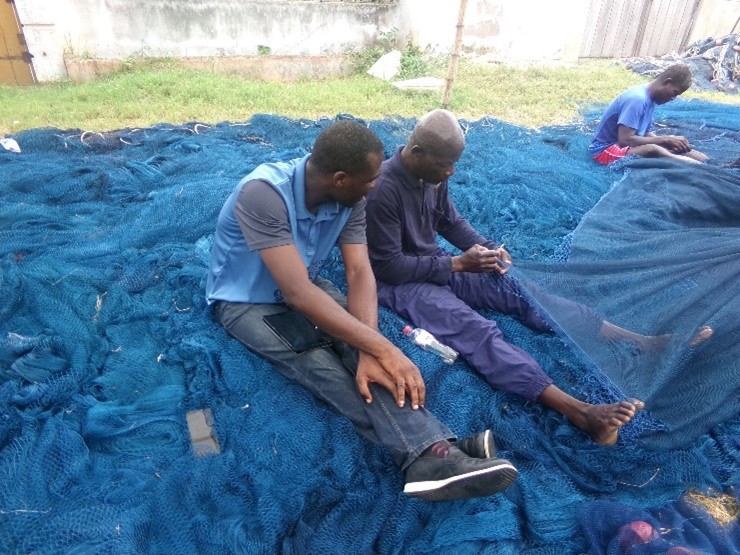
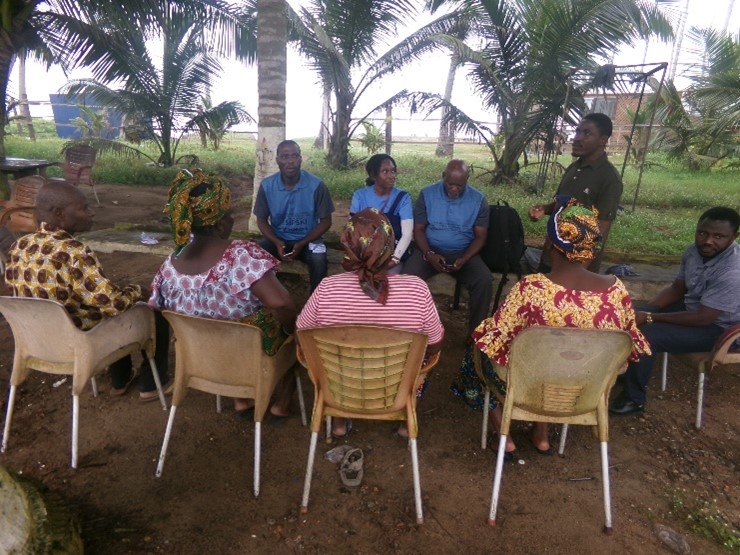
The research team, led by Dr Ifesinachi Okafor-Yarwood and comprised of Nana Kweigyah and Kenneth Arthur (Canoe and Fishing Gear Owners Association of Ghana – CaFGOAG), Emmanuel Tenkorang (Fisheries Committee of the West Central Gulf of Guinea – FCWC), Mr Kwesi Johnson (Local Consultant and Research Field Supervisor; Freelance Coastal Marine Fisheries Sustainability Community Development Practitioner), Gabriel Mevuta (co-opted volunteer from Friends of the Nations) and Josephine Laryea Asare (PhD researcher – University of St Andrews) express their appreciation to all fisherfolk and stakeholders in the Central Region whose contribution made the data collection exercise in Apam and Cape Coast a success! Appreciation goes to the research collaborators – the Fisheries Commission, CaFGOAG, the FCWC, for their efforts towards a fruitful data collection in the Central Region. The team wishes to acknowledge the Pew Fellows Program in Marine Conservation at the Pew Charitable Trusts whose funding made this research project possible.
Having wrapped up successful engagements with fisherfolk in the Central Region on 20 July, the team moved on to the Western Region to engage fisherfolk in Sekondi and Abuesi for the next and final phase of the data collection.