

On 27 January 2026, the Sankofa research team and collaborators, led by Dr Ifesinachi Okafor-Yarwood, the Principal Investigator (PI) on the project, held the regional validation event at the Cape Coast Metropolitan Assembly Hall, to share research findings with fisherfolk and other stakeholders in the Central Region for their feedback. This engagement was a continuation of research validation events with fisherfolk that commenced in the Western region in September 2025. The event brought together fisherfolk (comprising traditional leaders, crew members, canoe and boat owners, fish processors and traders, service providers and community members) from fishing communities engaged during the data collection in 2024 from Apam (including Mumford) and Cape Coast (comprising Abrofo Mpoano, Ola, Duakor and Ekon). Representatives from state agencies (the Mayor of the Cape Coast (also the Metropolitan Chief Executive of Cape Coast Metropolitan Assembly (CCMA)) – Hon. George Justice Arthur and the Central Regional Director of the Fisheries Commission, Mr Emmanuel Dovlo), academia (Prof. Aggrey-Fynn from the Department of Fisheries and Aquatic Sciences, University of Cape Coast (UCC)) and NGOs/CSOs (Environmental Justice Foundation) also participated in the regional validation event. The event was chaired by the Queen Mother of the Anomabo Traditional Area, Nana Mbroba Dabo I. Altogether, 164 stakeholders (113 male and 53 female) from across the central region of Ghana participated in the validation event.

Dr Ifesinachi Okafor-Yarwood, PI of the Sankofa Project presenting the research findings 
Dr Ifesinachi Okafor-Yarwood, PI of the Sankofa Project at the Central Regional validation event 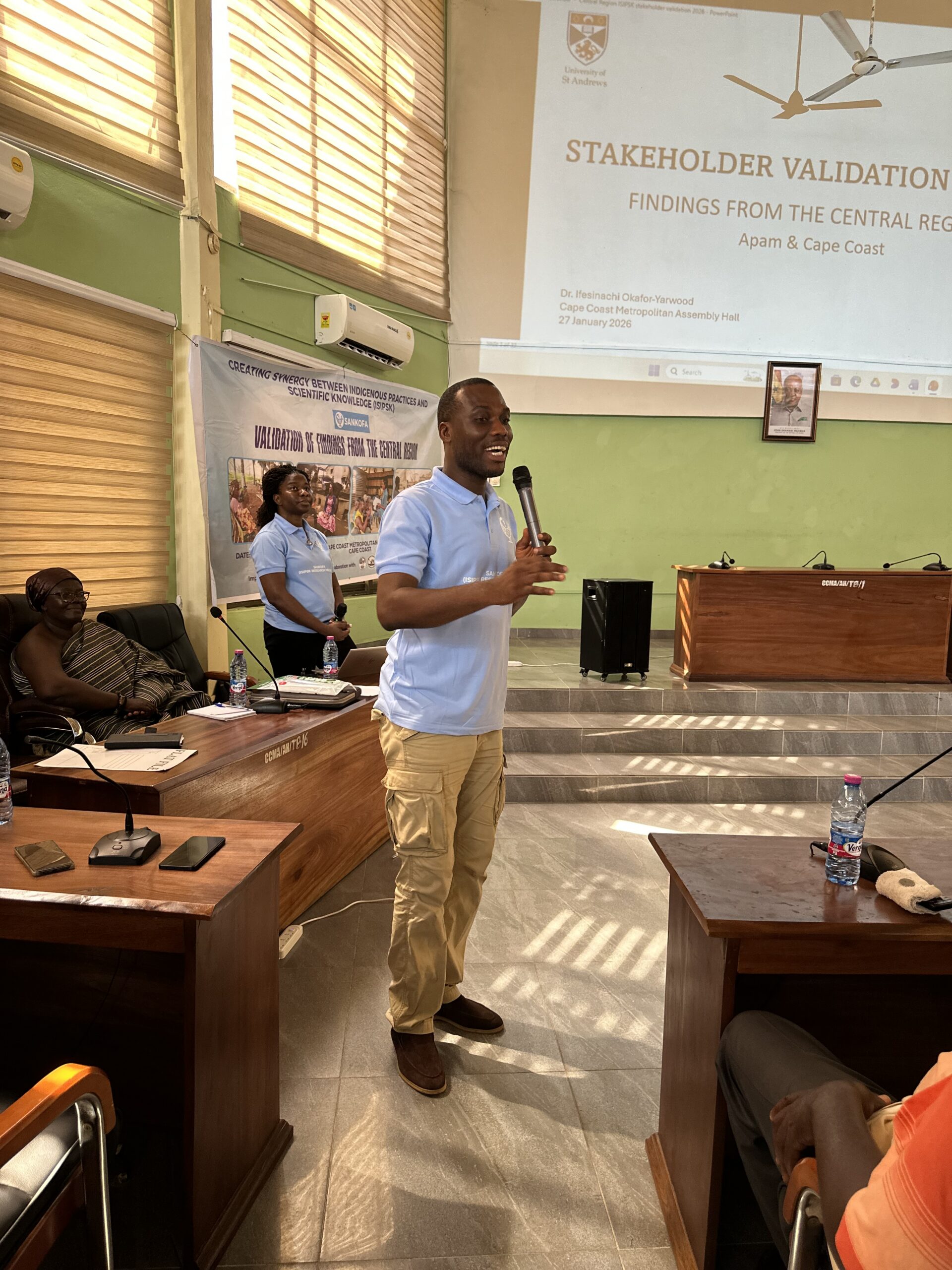
Nana Kweigyah, focal person from Sankofa’s local collaborator CaFGOAG, engaging participants during the event 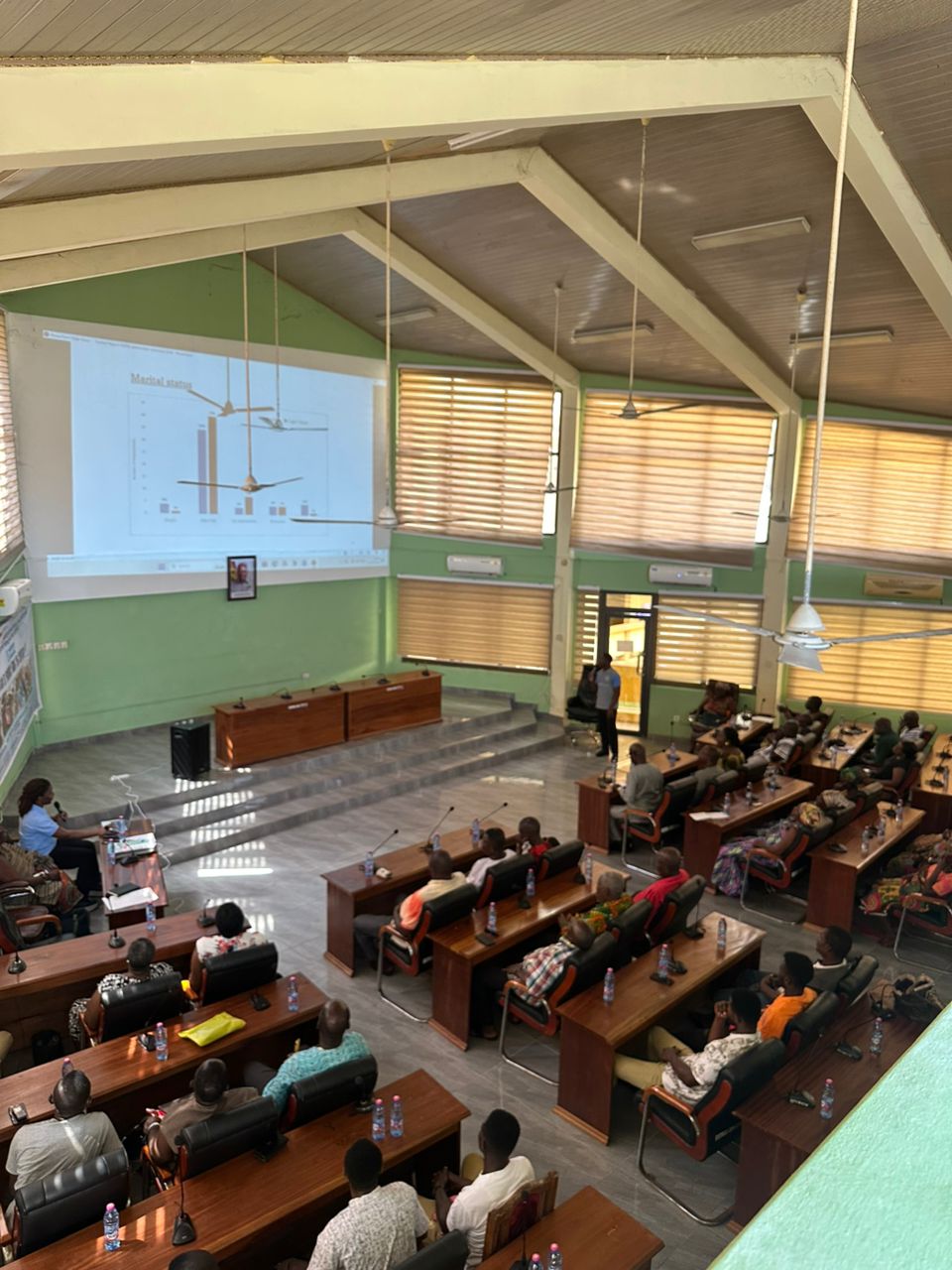
Power Point presentation of findings to fisherfolk and stakeholders present at the Central Region validation event
The PI presented a summary of findings to stakeholders, which a team member translated into Fante to foster clarity and facilitate subsequent interactions about the results. The presentation highlighted the demographics of surveyed participants from Apam and Cape Coast, fisherfolk’s report on the state of the fisheries, their perceived gendered socio-economic impacts of the fishing closed season, traditional practices historically used for fisheries management and fisherfolk’s suggestions for inclusive and equitable conservation of the resources. Subsequently in the open forum, fisherfolk confirmed that the research findings mirror their realities. The presentations triggered reflections on some key historical changes observed in the Central region’s fisheries. They noted that the decline in fish stocks dates back to the 1970s, and that the activities of industrial bottom trawl vessels were identified as major contributors to habitat destruction. Female participants particularly stressed that illegal fishing methods employed by fishermen and the continued harvesting of juvenile fish are major drivers of fish stock depletion.
Traditional fishing holidays and seasonal rest periods, such as the Tuesday fishing holiday that were previously observed for fisheries conservation, have declined. A strong case was made to reinforce the Tuesday fishing holidays, with 129 participants voting in its favour. Participants also discussed traditional ecological indicators such as the “obue”, where fishers made abundant catches by naturally using the silvery shine of the fish under the moonlight to aid their harvest; many believed this obue practice has declined due to modern fishing practices, especially light fishing. Participants also reported that plastic pollution of the marine and coastal environments has significantly increased compared to past decades.


Representatives from various institutions emphasised key insights: Prof. Aggrey-Fynn from the University of Cape Coast highlighted that traditional practices often contain scientific value and should be integrated into modern fisheries management. Mr Emmanuel Dovlo, the Central Regional Director of the FC, confirmed that recent stock assessments show a significant decline and recommended strengthening enforcement against illegal fishing. Miss Prisca Adongo from the Environmental Justice Foundation (EJF) expressed her organisation’s support for community-driven conservation initiatives. The Mayor of Cape Coast noted that their participation in the validation event aligned with the Assembly’s plans of environmental sustainability and climate action. He commended the Sankofa project for its collaborative research approach that emphasises equity and declared the Assembly’s support for partnerships of its kind that contribute to equitable, locally grounded fisheries governance. The Queen mother of Anomabo, who was chair of the event, gave her remarks, then representatives from local fisher groups, the Ghana National Canoe Fishermen Council (GNCFC), and the National Fish Processors and Traders Association (NAFPTA) delivered solidarity messages to bring the proceedings to a close.


The Central Region validation event was successful due to the keen participation of fisherfolk from the Central Region; support from the research collaborators – Canoe and Fishing Gear Owners Association of Ghana (CaFGOAG), the Fisheries Committee of the West Central Gulf of Guinea (FCWC) and the Fisheries Commission; the solidarity from stakeholder representatives from the Traditional Councils, CCMA, Academia, NGOs/CSOs among others. Appreciation to the Sankofa project funders, the Pew Fellowship in Marine Conservation at the Pew Charitable Trusts, and the implementing organisations, the University of St Andrews and the Research Impact Innovation Services Enabler (RIISE) team, for their support for the International Science Partnership Fund, which funded the regional validation events. Commendation to the research team: Dr Ifesinachi Okafor-Yarwood (PI), Mr Kwesi Johnson (Local consultant and field Supervisor), Nana Kweigyah (Research Assistant (RA) and Representative from local collaborator CaFGAOG), Kenneth Arthur (RA from local Collaborator CaFGAOG), Emmanuel Tenkorang (RA from Local Collaborator FCWC), Gabriel Mevuta (RA from Friends of the Nation), Alexander Okyere (Volunteer from UCC) and Josephine Laryea Asare (PhD researcher at the University of St Andrews supporting work on the Sankofa project).

Key stakeholders present at the Central Region validation event (from left: Regional Director of the Fisheries Commission, Mayor of Cape Coast, Queen Mother of Anomabo, Rep. from Academia (UCC), Sankofa PI, Rep from EJF (NGO) 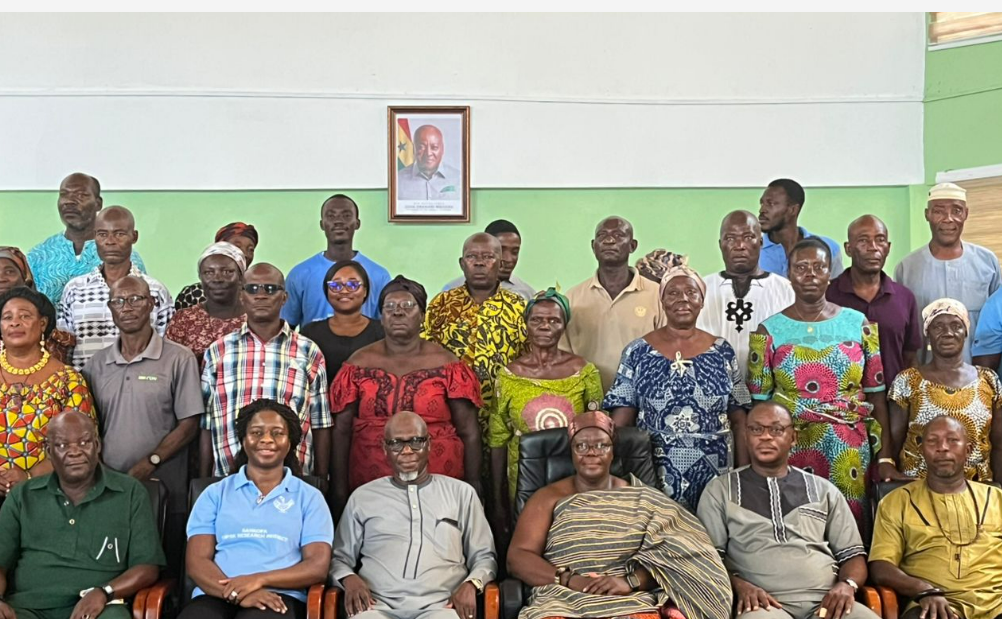
Section of group picture of participants at the validation event held in Cape Coast, Central Region 
Section of fisherfolk at the validation even at Cape Coast
Follow the links to read more about the Central Region stakeholder validation event on major TV and online media outlets in Ghana: JoyNews, Ghana News Agency