
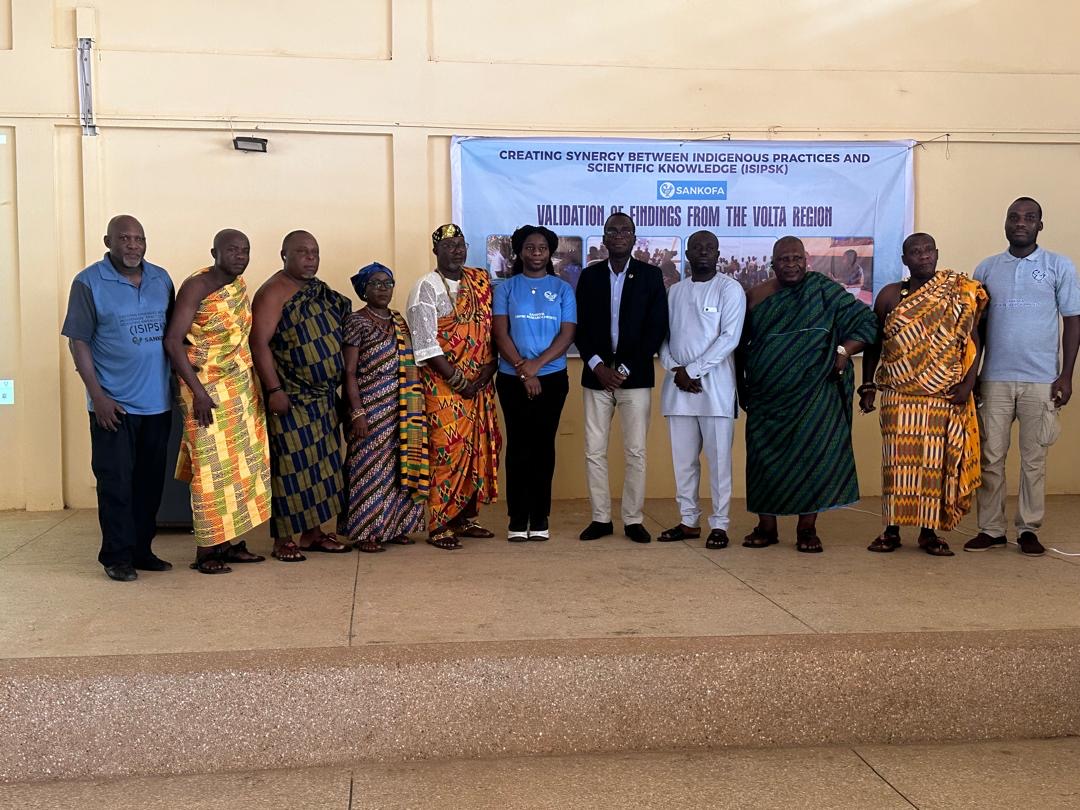
Continuing the validation of research findings with stakeholders across the four coastal regions, engagements with fisherfolk and stakeholders in the Volta Region occurred on Wednesday, 28 January 2026, at the Ketu-South Municipal Assembly (KSMA) Hall, which was led by the project’s Principal Investigator (PI), Dr Ifesinachi Okafor-Yarwood, and supported by members of the Sankofa research team. Fisherfolk who participated were from the communities engaged during the research in 2024 i.e. from Abeliakope (including some participants from Denu and Davidkope) and Abutiakope, as well as from twelve other fishing communities in the Volta Region, which were Viepe, Keta, Vodza, Kedzikope, Vui, Tegbi, Whuti, Atorko, Dzelukope, Dzita, Ho and Agbledomi.
Altogether, a total of 151 participants (113 male, 38 female) from sixteen fishing communities in the Volta Region gathered to validate the research findings and share their input on developing issues in the fisheries sector. They comprised of canoe and fishing gear owners, fish processors and traders, crew members, fishing service providers, community members, traditional authorities, sustainability and fisheries advocacy youth leaders (from KSMA, Keta Municipal Assembly (KMA), Anloga District Assembly), representatives from state agencies (the Municipal Chief Executive of KSMA, the Volta Regional Director of the Fisheries Commission), NGOs/CSOs (Centre for Natural Resources and Environmental Management (CNREM) based in Keta, the African Centre for Cross Border Trade Institute (ACCBTU) based in Dzodze) and personnel from local media houses in the Region. The event was Chaired by Togbui James-Ocloo V (Chief of Keta), who was supported in the role by Togbui Adama of Somey Traditional Area and the Queenmother, Mama Wui of Kedzikope.


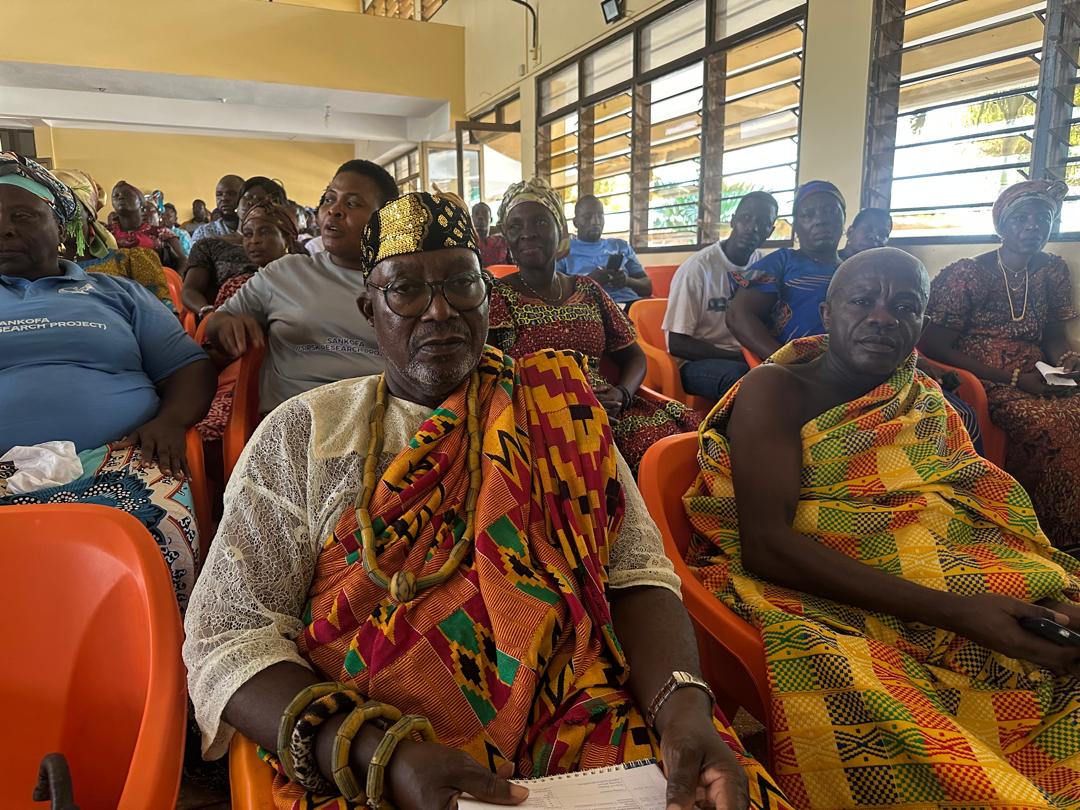
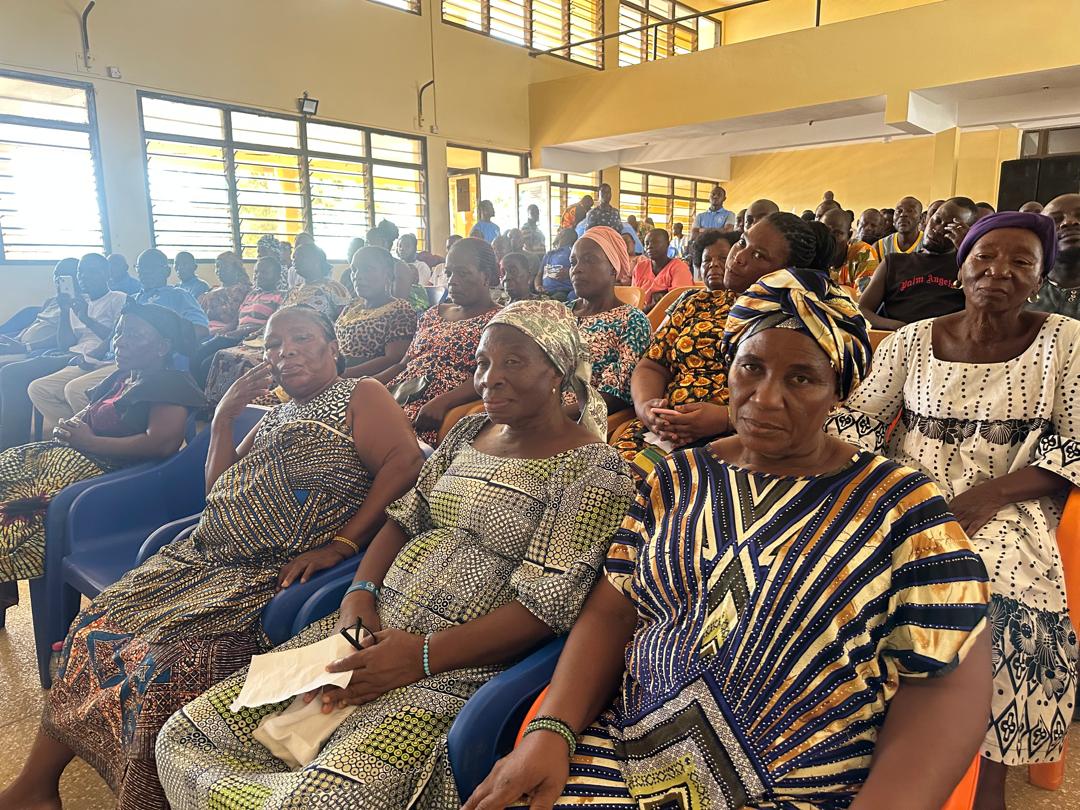
A summary of the research findings was presented to stakeholders and was translated into Ewe to foster clear communication and facilitate subsequent interactions with participants about the results. The presentation, delivered by the PI highlighted the demographics of surveyed participants, fisherfolk’s report on the state of the fisheries, their perceived gendered socio-economic impacts of the fishing closed season, traditional practices historically used for fisheries management such as nudedefu, and fisherfolk’s suggestions for inclusive and equitable conservation of the resources. In the open forum, some participants shared their input, which emphasised the findings that had been presented. Participants submissions are recapped below:
- The Assemblyman from Tegbi Ashiata in the Anloga District shared that, based on his personal discussions with some fisherfolk in his community about the fishing closed season, the majority do not support its implementation in July but rather in August. The preferred month mentioned by the Assemblyman differed from the months of May or June proposed by fisherfolk in Abeliakope and Abutiakope. In response, the research team explained that the findings presented what majority of participants had mentioned however his contributions have been noted.
- A net owner by name Mr Thomas Agbekpornu, shared that the fishing nets used in the olden days made it easy for juveniles to escape because they had wider mesh sizes compared to recent fishing nets, which overall are bigger in size but with smaller mesh sizes. He added that because of the nets some fishers are currently using, most of the catches are juveniles, which is not sustainable. He added that “since other fishers have also adopted light fishing, those who fish near the shores barely harvest any fish”. He cautioned that things would continue to worsen unless fisherfolk changed; he concluded by encouraging fellow fishers to return to the good practices of their forefathers.
- Mr. Joel Degue of the CNREM disputed the ecological variations affecting appropriate closure timings. He noted that historically, fishers in the Volta Region observed a voluntary closed season in July and proposed that the formal closed season should be implemented on a regional basis. He also reported an increase in the use of small-mesh nets and light fishing in the region.
- A fisher (who said he had been fishing since he was 14 years old) confirmed that some fisherfolk’s activities have negatively impacted the fishery. He noted that in the past, people could cast nets and harvest fish at the shores without needing a canoe to go deep into the sea, but that no longer happens. Other factors he listed were population growth and increased competition for resources and the declining respect for traditional taboos and leadership structures. He advocated that the traditional practice known as “nudedefu,” which involves ritual offerings to sea deities and is believed to contribute to community well-being and fish abundance, needs to be revived. He added that the government needs to regulate the size of nets by introducing a law that will require fishers to apply for nets of specified sizes that match the recommended size for their targeted fish species.
- The traditional leaders emphasised that historically, traditional seasonal closures existed alongside ritual practices, and their simultaneous observance was believed to promote ecological balance and community welfare.
- To share their input about the preferred fishing holiday, 100 out of 151 participants present voted for its observance on various days of the week: 79 voted for its observance on Sunday, 17 voted for Wednesday (the current fishing holiday), 3 voted for Tuesday, and 1 voted for its observance on Saturday.


As the meeting drew to a close, the invited dignitaries addressed participants and shared their thoughts about the research findings.
- The Municipal Chief Executive (MCE) of KSMA, Hon. Mr. Nicholas Worclachie, in his keynote address, highlighted the economic impact of the closed season on non-salaried citizens (fishers). He also highlighted the Municipal’s planned initiatives to regulate fisheries activities to generate revenue and support management systems.
- Torgbui James Ocloo, the Chief of Keta, noted that many of the practices he observed while growing up are no longer being used. He added that fisherfolk are no longer consulting traditional chiefs on some decisions, and as a result, their traditional leaders’ knowledge is underutilised. He concluded by urging the Chief fishermen to keep open communication with the traditional Chiefs.
- Mr. William Agbenu, Regional Director of the FC emphasised the importance of integrating scientific and indigenous knowledge systems. He cautioned that monitoring systems used for industrial fleets could extend to artisanal fisheries if compliance does not improve.
- Torgbui Adama in his closing remarks highlighted that the research findings demonstrate the important role traditional authorities could play in fisheries conservation. He observed that the neglect of traditional taboos by some fishers has weakened conservation efforts. He therefore called for the strengthening of traditional leadership systems along the coast to enhance their effectiveness in fisheries management. He further noted that Chief fishermen often operate in isolation and advocated for stronger collaboration between Chief fishermen and traditional rulers. According to him, such synergy would improve conservation outcomes and strengthen efforts to address declining fish stocks.

“We need to revive our traditional practice nudedefu because it contributed to community well-being and fish abundance”
Experienced Fisherman, Volta Region
Follow the links to read more about the Volta Region stakeholder validation event on major online media outlets in the region: News Volta, Ghana News Agency