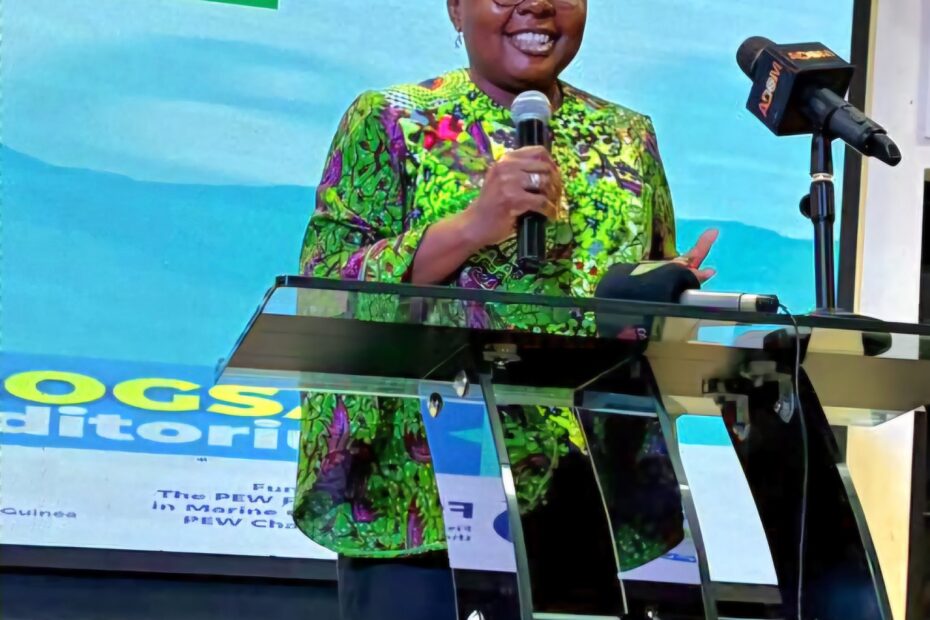
The national event to validate findings across the four coastal regions of Ghana followed shortly after the stakeholder event, which validated findings from the Greater Accra Region on 3 February 2026 at the CLOGSAG Conference Hall in Accra. This climax event for the Sankofa research project brought together high-level policymakers, maritime and fisheries authorities, traditional authorities, fisherfolk leaders from across the four regions of Ghana, major fisheries stakeholders, and major national media organisations. The Guest of honour for the event was the Minister of Fisheries and Aquaculture, Hon Emelia Arthur, and it chaired by Hon. Dr Godfred Seidu Jassaw, the Chairman of the Parliamentary Select Committee for Agriculture and Cocoa Affairs. Other participating dignitaries included Dr. Kamal-Deen Ali, Director-General of the Ghana Maritime Authority; Commodore Faustina Nyarko, the Coordinator of Fisheries Enforcement Unit and representing the Chief of Naval Staff (CNS), a member of Council of State and advisor to the president of Ghana (also a fish processor) Madam Cynthia Komeley Adjetey (aka “Happy Yourself”), among several others. In all, 135 major stakeholders (94 male, 41 female) attended this concluding validation event in Accra.

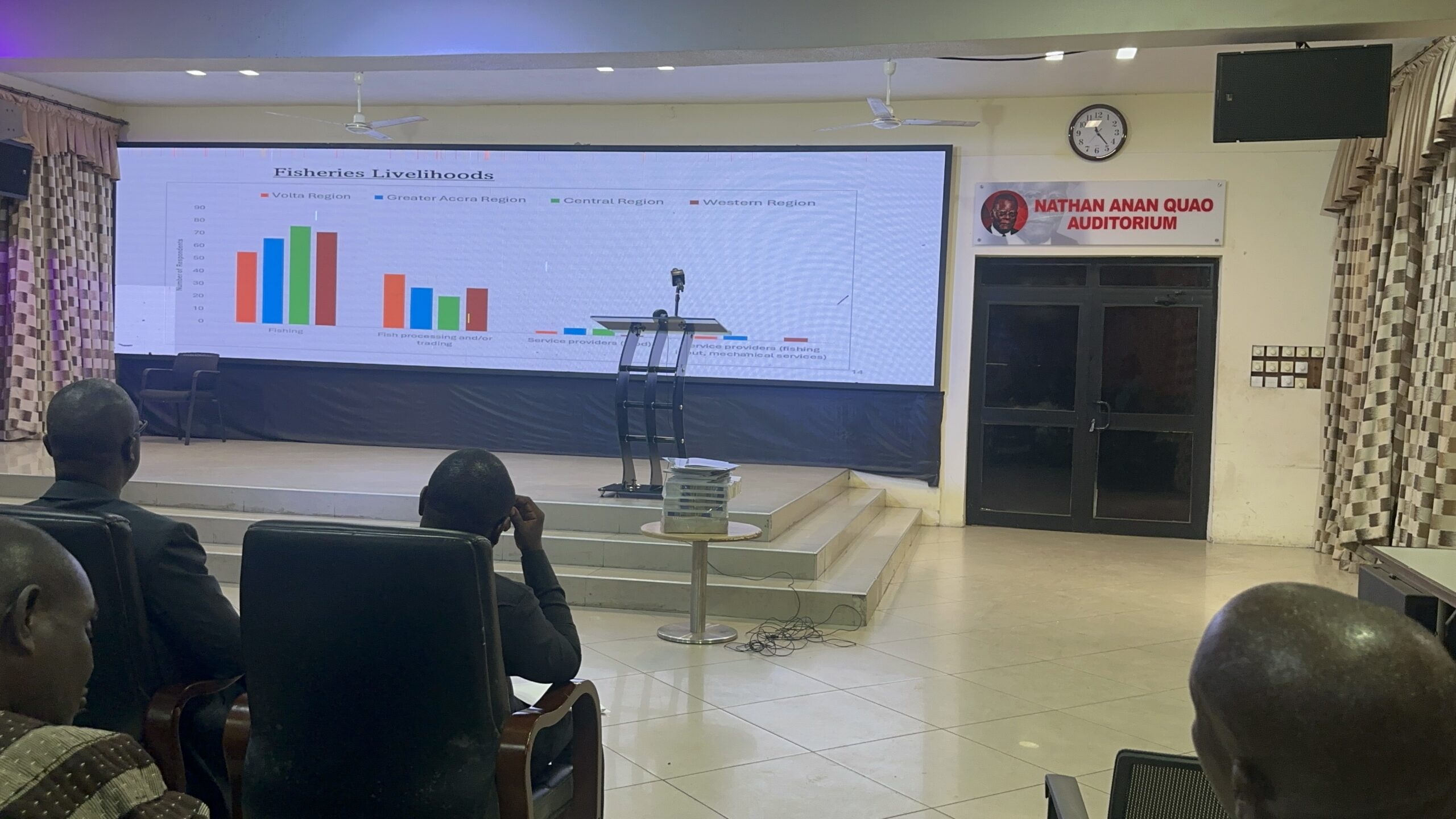

Following the presentation of the findings, dignitaries, including the event Chairman, the Guest of Honour and other key stakeholders, delivered their addresses.
The Chairman, in his remarks, stated that, “It is rare to have researchers come and take data from us and come back to cross-check with the knowledge holders if the findings are valid. Thank you for coming back to the knowledge holders to check that the findings you want to share with the world are accurate and valid”. He raised concerns about the use of chemicals in fishing, which has led to an increase in fisherfolk’s calls for fish-testing devices. He emphasised the validity of Indigenous science and stressed that modern science is not superior, given the many synergies between Indigenous and modern scientific knowledge. In conclusion, he admonished all fisherfolk in the Greater-Accra Region to respect the traditional rest days on Tuesdays and Sundays, and emphasised the Government’s support for Aquaculture to boost fish production for the country.

In the keynote address, the Minister of Fisheries and Aquaculture, Hon. Emelia Arthur expressed her pleasure at attending the event and acknowledged the occasion’s significance. She noted that President John Dramani Mahama recognises the importance of bridging indigenous and scientific knowledge, and has appointed a Presidential Advisor to create synergy between these two knowledge systems within the Ministry of Fisheries and Aquaculture. The Minister acknowledged the contributions of Dr Okafor-Yarwood and the Sankofa Project, highlighting the importance of collaborative research in advancing equitable fisheries governance. Addressing the artisanal fisherfolk, she said, “The President of Ghana announced that we do not observe the close season in 2025 and we asked you to observe some practices. From the findings of the Sankofa research, we may maintain no closed seasons based on the findings, for as long as you also do your bit to comply with existing regulations and observe the traditional fishing holidays.” She emphasised that environmental sustainability cannot be achieved without social equity, and underscored the Ministry’s commitment to conservation approaches that are fair, inclusive, and responsive to the realities of fisherfolk’s livelihoods. She noted that “the findings of the Sankofa Project provide a critical foundation for developing equitable fisheries livelihoods and informing evidence-based policy“. The Minister commended the collaborative contributions of the Fisheries Commission, the Fisheries Committee for the West Central Gulf of Guinea (FCWC), the Canoe and Fishing Gear Owners Association of Ghana (CaFGOAG), traditional authorities, and all partners, recognising that their collective engagement ensured the research remained grounded in local knowledge. Highlighting the significance of returning research findings to communities, which contrasts past practices of data collection without subsequent engagement, she commended the Sankofa Project for modelling a more accountable and inclusive research ethic. Hon. Emelia Arthur further noted that the project’s findings were presented at the United Nations Ocean Conference (UNOC), where indigenous knowledge was prominently projected as a cornerstone of ocean governance. Building on this momentum, she announced that the Ministry organised its first-ever conference with fishers in November 2025 and reaffirmed its commitment to working alongside fisher leadership to enshrine traditional governance practices within modern fisheries management systems. She concluded by emphasising the Ministry’s dedication to collaborative management as the foundational principle informing future fisheries policy.
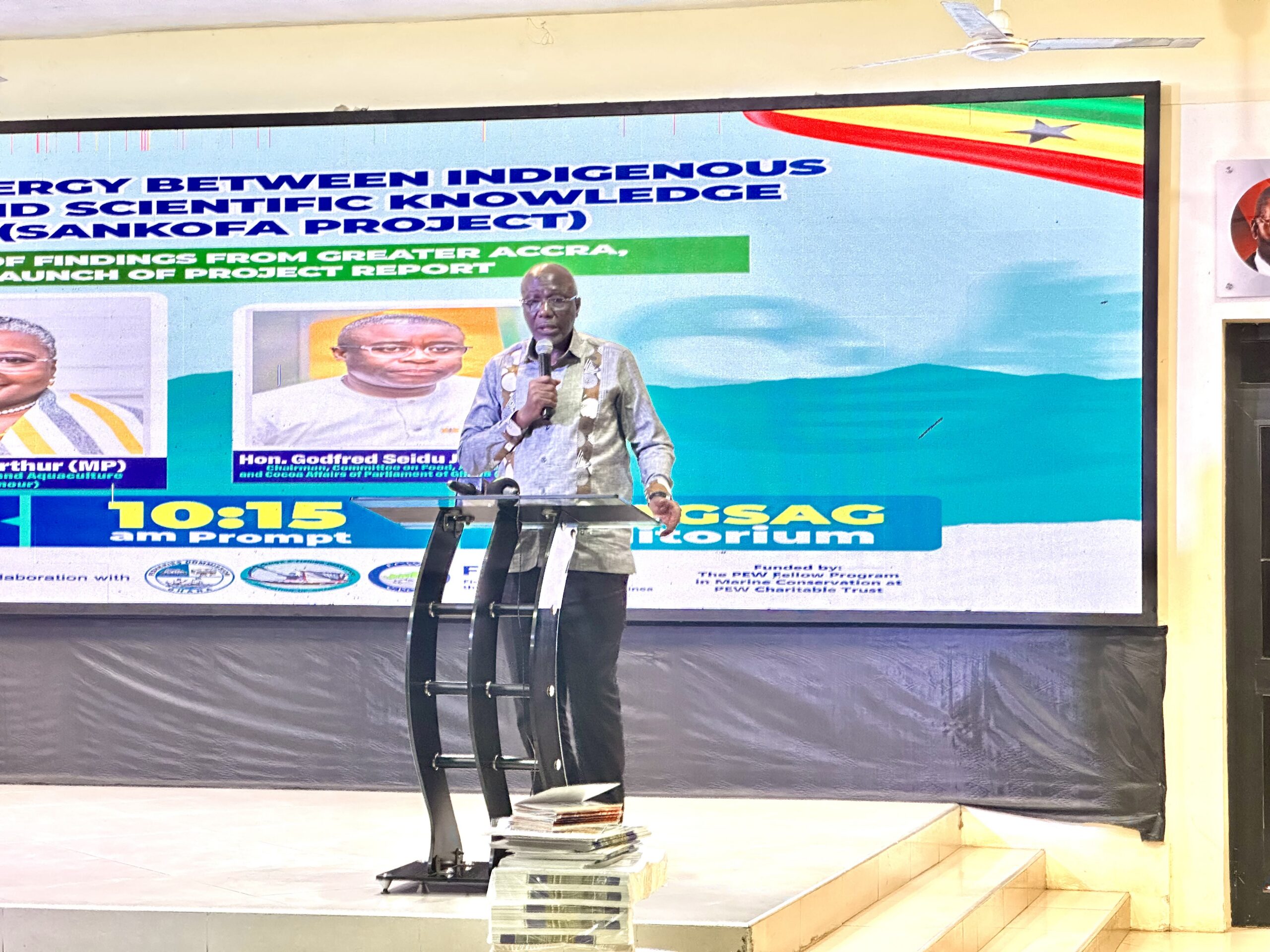
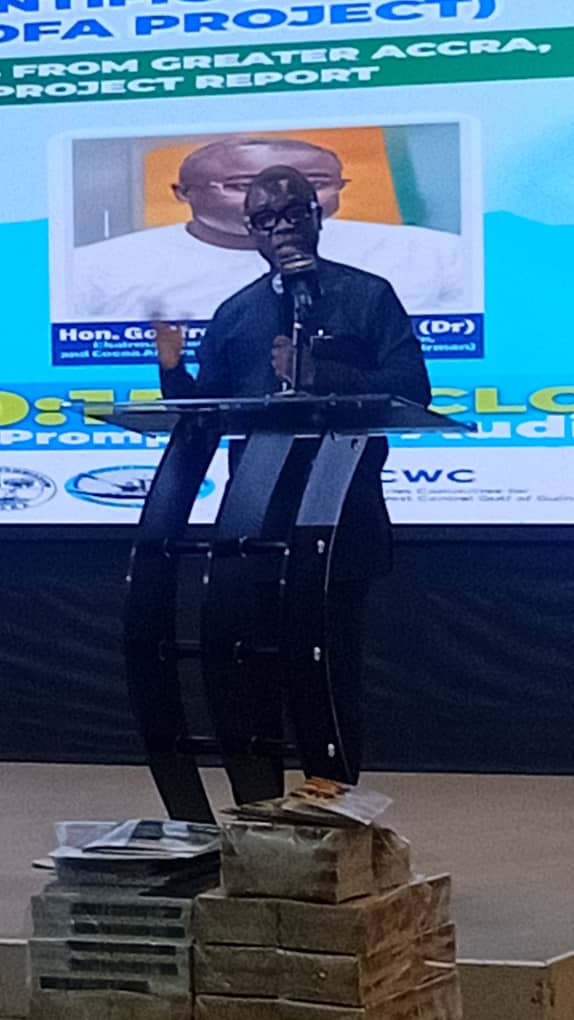
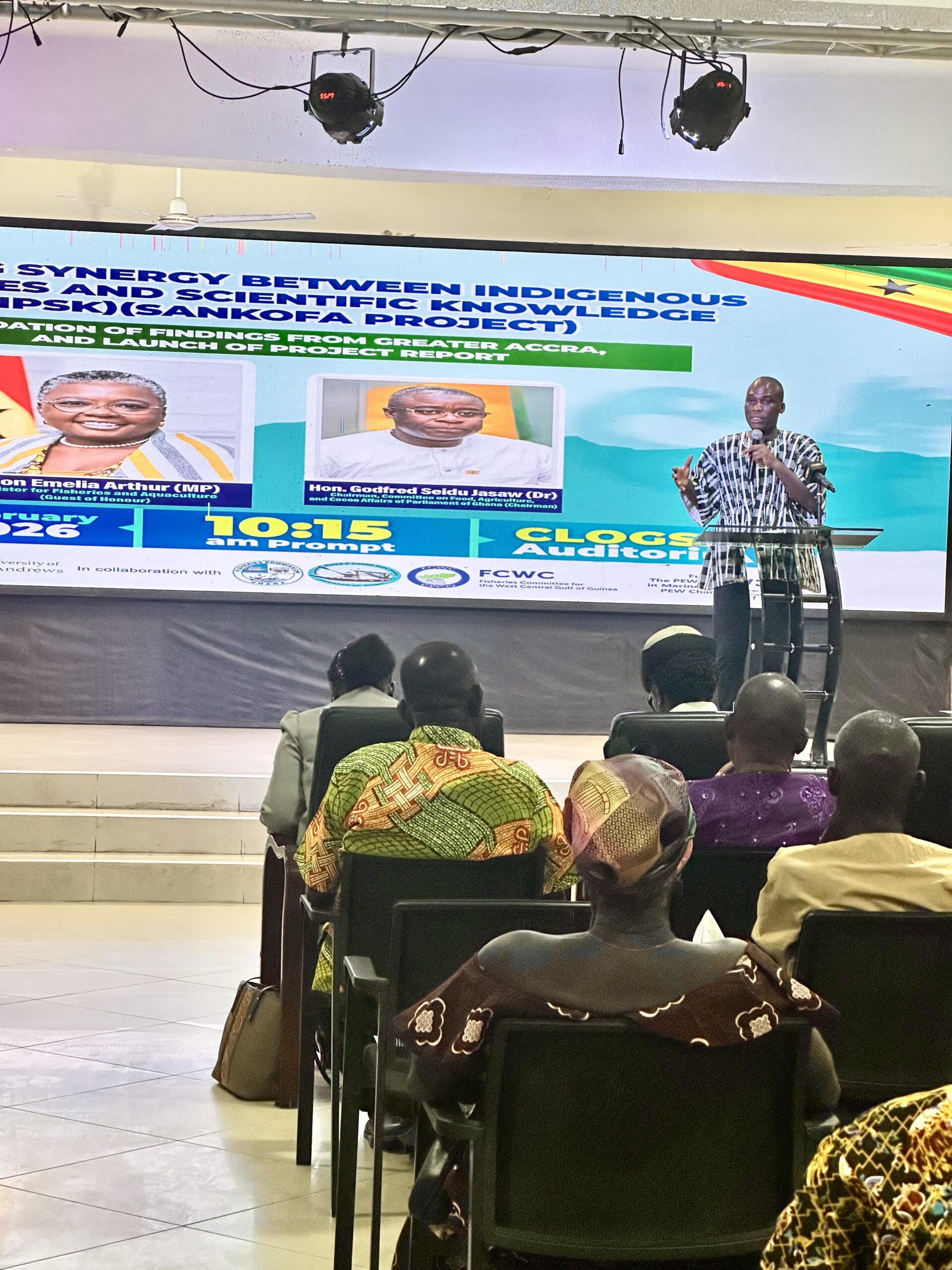
The Director-General of the Ghana Maritime Authority (GMA), Dr Kamal Deen Ali acknowledged the work carried out by the Sankofa project and emphasised that GMA will continue to engage with fishers in the important work they do. Highlighting the depleting state of fisheries resources, he urged fisherfolk and all stakeholders to work together to improve the situation and avert the collapse of the industry. He admonished relevant government agencies such as the GMA, Fisheries Commission, and District Assemblies, to adopt a more collaborative approach to their work, especially regarding safety regulations, improved vessel registration and licensing systems and addressing coastal plastic pollution. He highly commended the work of Sankofa Project saying, “in my role as the Director-General (DG) of GMA, I see this as something impactful, and we (GMA) look forward to working together in the next phase”.
The Deputy Director of the Fisheries Commission, Prof. Berchie Asiedu, who represented the Executive Director of the Fisheries Commission at the event, in his statement, noted that small-scale fisheries in Ghana contributes 80% of the fish for livelihoods and plays an important role in food security. He added that global fish stocks have been in decline since the 1990s, a trend the fishers acknowledged has also been the experience in Ghana. He shared that, in the past, fisherfolk observed rest days; men did not have sex before going to sea; and women did not go near the sea during their period. He concluded by affirming the Fisheries Commission’s support to the findings, particularly in going back to the olden days’ practices and their keenness to collaborate with stakeholders under the Sankofa initiative to conserve national fisheries resources.
A representative from NAFPTA, in delivering a solidarity message, urged fishermen to see their work as work given to them by God. She emphasised the important role of both men and women in the sector, saying that all the fish caught by men are directly handled by fish processors and traders. Reflecting on existing fishing practices, she admonished all fishers to fish legally and further urged both male and female fisherfolk to adopt responsible fishing practices that demonstrate good stewardship, as earlier generations did to protect the resources.
The President of GNCFC, Nana Jojo Solomon, highlighted the importance of transparency and stakeholders working together, particularly in the spirit of collaborative management of the resources. He added that synergies already exist, but most organisations that engaged fisherfolk to collect data from them rarely acknowledge their input or contribution.
The president of CAFGOAG, Nana Kweigyah, in his address, extended the gratitude of all the local collaborators to the University of St. Andrews and the Sankofa project partners. He noted that through the Sankofa project, the fisher organisation received equipment, funding and fisherfolk’s capacities have been strengthened. He added that the project has taught fisherfolk new approaches to partnerships and has encouraged them to be proactive leaders. He emphasised that the project is a testament to the fact that fishers can take the lead in driving change through research and achieve results. He proposed the establishment of an artisanal fishers’ forum in the sub-region that could convene quarterly to discuss developing challenges and how to address them, and confirmed CAFGOAG’s readiness to support its implementation. He invited other fisheries stakeholders to partner with fishers and concluded by noting that fisherfolk’s learning experience through the Sankofa project will be put to good use.

Commodore Faustina Nyarko, The Coordinator of the Fisheries Enforcement unit delivering her address 
Madam Sylvia Owu, the President of WIMOWCA delivering her address at the event 
Madam Cynthia Komeley Adjetey (aka “Happy Yourself”) delivering her address 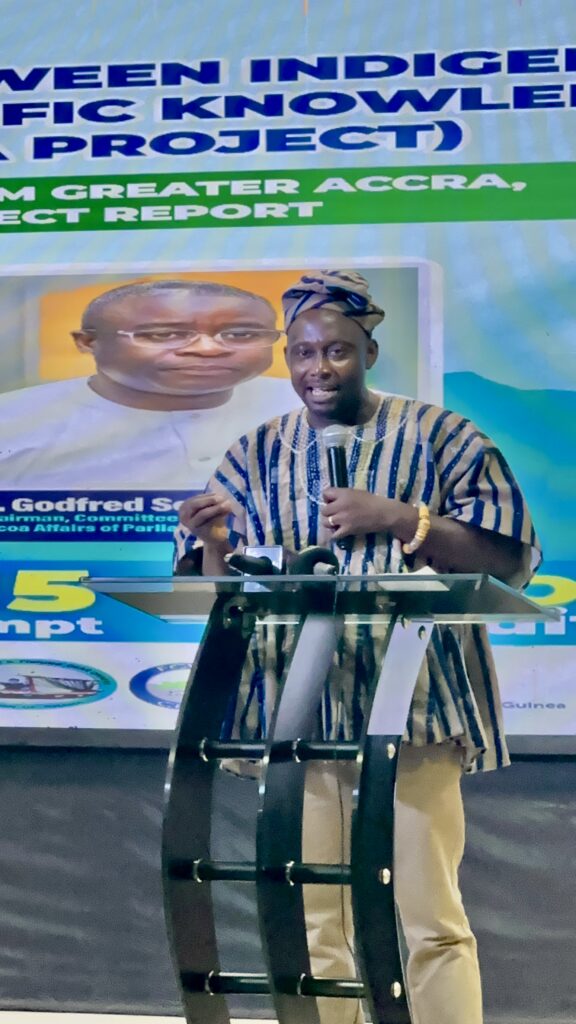
Mr Kyei Yamoah, the Executive Director of Help Foundation Africa, delivering his address at the event
Commodore Faustina Nyarko, the Coordinator of the Fisheries Enforcement Unit and the highest-ranking female in the Ghana Navy, in her solidarity message, commended the Sankofa project for its distinctive approach to creating synergies between indigenous knowledge and local practices with formal fisheries management. Picking up on ongoing discussions, she posed a thought-provoking question to all stakeholders, asking “Are we ready to abide by our own suggestions to ensure that our fish stock is not completely depleted?” She stated that sustainable fisheries in Ghana is achievable and the Sankofa Project is providing the collaborative platform for achieving this balance. She added that “traditional closed fishing days, taboo areas i.e. places that we are not allowed to go to in those days, seasonal restrictions and community-based monitoring; These practices are not relics of the past and remain relevant today. Unfortunately, they are fading away, and we must Sankofa – go back to what we practised in the past”. She noted that the value of the Sankofa project is its commitment to integrating local and scientific tools, which both support stock assessment, and urged all to support the findings. Emphasising that enforcement works best when fishers recognise and respect the authority of enforcement, she admonished all stakeholders to desist from interfering in the process when offenders are arrested for illegal activities, as it does not help the sector. She concluded by reminding that enforcement is most effective when communities also recognise their own responsibility in compliance.
The President of the Women in Maritime of West and Central Africa (WIMOWCA), Madam Sylvia Owu, in her solidarity message, commended the Sankofa team for the brilliant work and noted that WIMOWCA is interested in studying the report’s findings to inform their work with fisherfolk.
Madam Cynthia Komeley Adjetey (aka “Happy Yourself”), who is a member of the Council of State, an Advisor to the President of Ghana and also a prominent fish processor in Tema, in her address expressed her joy that the things that fisherfolk used to do previously in the olden days have come to light. She noted that in the olden days, our ancestors went to sea with containers of water, not with sachet water. She urged fishers to abide by the fisheries laws and desist from unapproved fishing practices, as regularly admonished by His Excellency, the President of Ghana. She added that in the olden days, fishers did not practice light fishing and urged fisherfolk to stop it. She concluded with a compelling statement: “Fishing is what we do to support our families. I have been speaking to the President on behalf of the fishers. I am using this platform to plead with fisherfolk to return to the good practices and ways of the past and stop the illegal activities.”
The Executive Director of Help Africa Foundation, Mr Kyei Yamoah, in his solidarity message, noted that for many years he has advocated for the formal documentation of indigenous and local knowledge, and it is good to finally see that his advocacy is coming to fruition. He emphasised that this development presents an opportunity for us (fisherfolk) to start telling our own stories and tell it well. He added that, historically, it was fishers who announced whether new fishing gears were introduced were destructive or not.
In the closing remarks, the Chairperson noted that the contributions of the Chiefs, fisherfolk, and all participants are duly acknowledged. He admonished that, despite artisanal fishers being excluded from the 2025 closed season, they nonetheless bear responsibility for the sustainability of the resources. He added that while the Sankofa research findings have been validated by fisherfolk and all stakeholders, the import of the work does not end after the event but rather calls for deliberate reflection on its implications. Regarding next steps, he stated that “we must extend the research and expand the scope across the communities to five communities per region to see if there are other lessons that we can learn from those communities and how they converge with those of the communities we have already been to. Members of parliament will also deliberate on it, to see how we can sustain the findings of the project.” He added that the role of industry has been emphasised, and collectively, stakeholders will need to consider how the industry applies indigenous practices. Regarding the situation of aged fishers who continue to fish, he said that their continued fishing may be because their social security is threatened. He added that “as a Government, this is a situation that we need to be conscious about and we will continue to amplify it on the floor of parliament”. In conclusion, he noted that there is incoherence in the policy space, where stakeholders are doing so much but working in silos. He added that he looks forward to seeing more of the proposal’s practical interventions to sustain the Sankofa project.


Throughout stakeholder engagements across the four coastal regions to validate the research findings, it has been confirmed that fisherfolk possess extensive ecological knowledge and a strong desire for the sustainable management of resources. Stakeholders have repeatedly commended the Sankofa Project for demonstrating that integrating indigenous knowledge with scientific research could strengthen relevance for policy relevance, community ownership, and long-term sustainability of the fisheries resources. Stakeholders have strongly noted that returning findings to communities not only validated research outcomes but also fostered trust, dialogue, and shared responsibility for the future of Ghana’s fisheries sector, and it is worth extending the activity to other Gulf of Guinea states.
The national validation event was broadcast by major TV and online media outlets (see the Minister’s X post about the event, also catch a local news reportage highlighting the Minister’s speech as well as an online article highlighting the event.

