
On Monday, 24 June 2024, the Creating Synergies between Indigenous Practices and Scientific Knowledge (ISIPSK) research project, locally dubbed ‘Sankofa’, was launched at the Tema Canoe basin. The event brought together over two hundred fisheries stakeholders, including representatives from the research collaborators, Fisheries Commission (FC), Fisheries Committee for the West Central Gulf of Guinea (FCWC) and Canoe and Fishing Gear Owners Association of Ghana (CaFGOAG). Also present to support the launch were individuals from Non-Governmental Organisations (NGOs), Civil Society Organisations (CSOs), women and men fisherfolk groups representing fishing communities from all 4 coastal regions, including fisher leaders from the eight research communities. The event was chaired by the Director of the Fisheries Scientific Survey Division (FSSD), Mr E.K. Dovlo, representing the Executive Director of the Fisheries Commission (FC), the government agency responsible for national fisheries management. The Queen Mother of Tema, Manye Naa Afua, was the co-chairperson, thus representing the traditional authority. The program was moderated by Mr Adjetey of CaFGOAG.
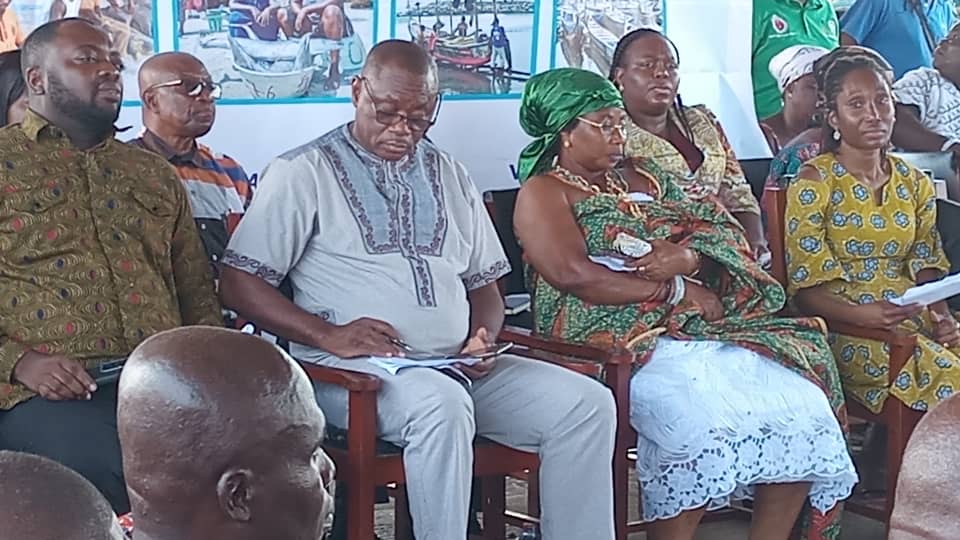
Statements from collaborators and key stakeholders indicated strong support and commitment to the research project. Nana Kweigyah, President of CaFGOAG, in delivering the purpose of the gathering noted that the enthusiastic participation from Tema fisherfolk makes it a worthwhile choice to host the event at their landing beach. Acknowledging previous assessments of the closed season, he noted that ISIPSK project will investigate the gendered impact of the closed season and explore synergies between indigenous practices with scientific knowledge for equitable fisheries management. He, however, stressed the inclusive approach of ISIPSK to their assessment and added that fisherfolks’ input is key, thus encouraging both women and men to participate in the research. Consequently, this event is to introduce and publicise the research project to all fisherfolk. He expressed appreciation to the University of St Andrews for the initiative, to the Fisheries Commission and the FCWC for their collaborative support and to all stakeholders for their encouraging response.
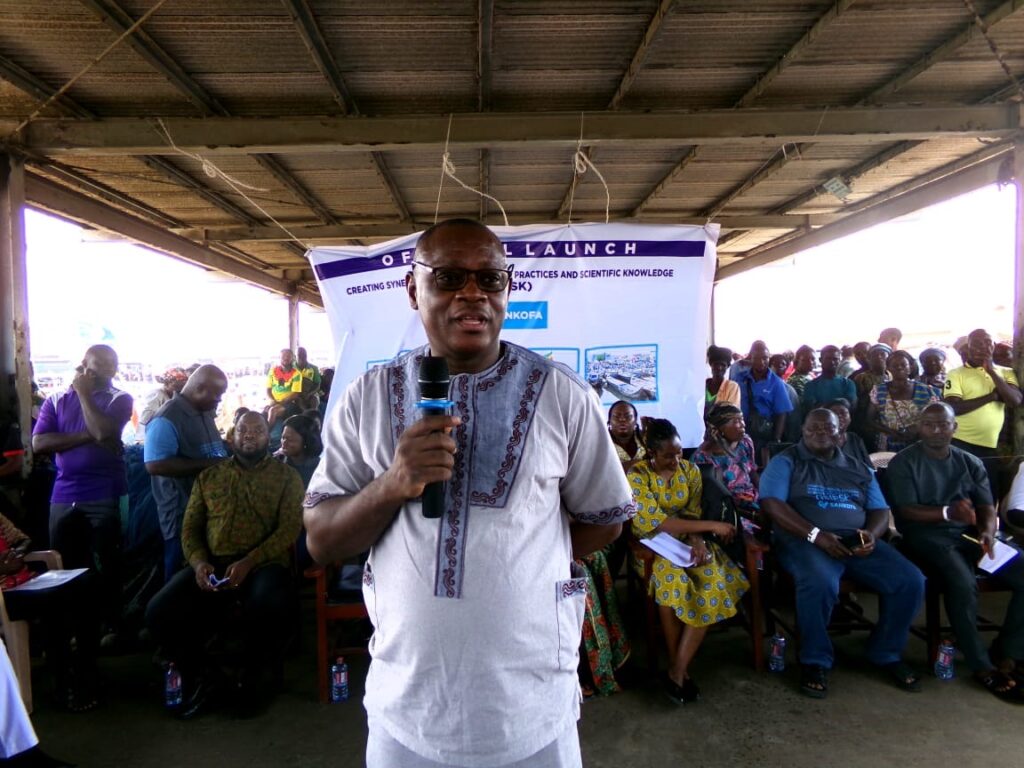
The chairperson, Mr Dovlo, in his opening address acknowledged that the adopted local name for the research project, ‘Sankofa’ is well understood by all fisherfolk. The FC recognises the importance of traditional knowledge to fishing in Ghana and recounted similar engagements between the FC and fishers in the 1990s. He emphasised that fisherfolk traditional knowledge is not inferior to scientific knowledge and cited fishers’ recognition of whales as harbingers for schools of fish; their navigation at sea with stars, the phases of the moon and currents; and choice of specific colours for net construction, which have improved local fishing. He thanked fishers for sharing such extensive knowledge and added that FC will complement it with their scientific knowledge. He pledged the FC’s support to the ISIPSK research project, adding that its findings would inform government’s decisions in fisheries management

Mrs Hanah Ansah, the focal person for the ISIPSK project and representing the Secretary General of FCWC, offered support to exploring indigenous knowledge historically used for sustainable fisheries, which corresponds with ‘Sankofa’. She recounted the FCWC’s efforts in contributing to sustainable fisheries in its six member countries in West Africa including fight against Illegal Unreported and Unregulated (IUU) fishing and decent work in fisheries, amongst others. She pledged that the FCWC will support the research project and promote its findings to improve fisherfolk livelihoods in its 6 member countries – Liberia, Cote D’Ivoire, Ghana, Togo, Benin and Nigeria.

The address from Dr Okafor-Yarwood, the project lead from the University of St Andrews, was delivered by Mrs Josephine Asare on her behalf. The statement acknowledged that fishing closed seasons is one of the management measures implemented by the government to address declining fisheries. The inclusive and collaborative nature of the research, which involves local collaborators throughout the project’s phases, was emphasised. The research objectives were recapped, and the eight selected communities outlined as Abeliakope and Abutiakope in the Volta Region; Tema and Akplabanya in Greater Accra; Apam and Cape Coast in the Central Region; and Abuesi and Sekondi in the Western Region. In acknowledging that the University of St Andrews does not assume to have answers to all the fisheries problems in Ghana or elsewhere in Africa, the research aims to advance knowledge on the gendered impact of the closed season and identify indigenous practices used historically for marine conservation for harmonisation with scientific knowledge were reiterated. In summarising, she stated that the research findings will be disseminated through collaborators at local, national and regional levels to potentially inform equitable and inclusive fisheries management decisions and policies.
Representing the Chief of Party of the Ghana Fisheries Recovery Activity (GFRA), Mr Socrates Segbor, in his statement, explained that GFRA (implemented by TetraTech with funding from USAID) is one of the main fisheries collaborators with the Ghana government and the FC working with fisherfolk in all four coastal regions on interventions aimed at rebuilding the fisheries stocks to improve livelihood. He acknowledged that all initiatives have an impact and mentioned that GFRA is promoting supplementary livelihoods among fisherfolk as a sustainable financial income alternative to address the socioeconomic impact of the closed season. He encouraged fisherfolk to diversify their income with non-fisheries livelihoods. He added that ISIPSK is a very good initiative, and the rich experience of fisherfolk that will be shared in upcoming engagements will enrich the findings of the study to help the government identify the gaps and improve its implementation of the closed season. He encouraged all to support the project in achieving its commendable objectives.
In a brief ceremony, the chairperson, representing the ED of Fisheries Commission, with the co-chairperson, the Tema Queen mother, and the company of all stakeholder representatives declared the ISIPSK research event launched. This was heralded with rousing applause from participants. The oral presentations from stakeholders were interspersed with musical interlude from a local cultural musical group whose performances livened up the event, stirring participants to actively responded to the musical tunes they were enjoying. The event was also covered by some main media houses in Ghana including the Adom TV (airing news in the local dialect), Joy News (airing news in the English language) and the Ghana News Agency (a national news journal).


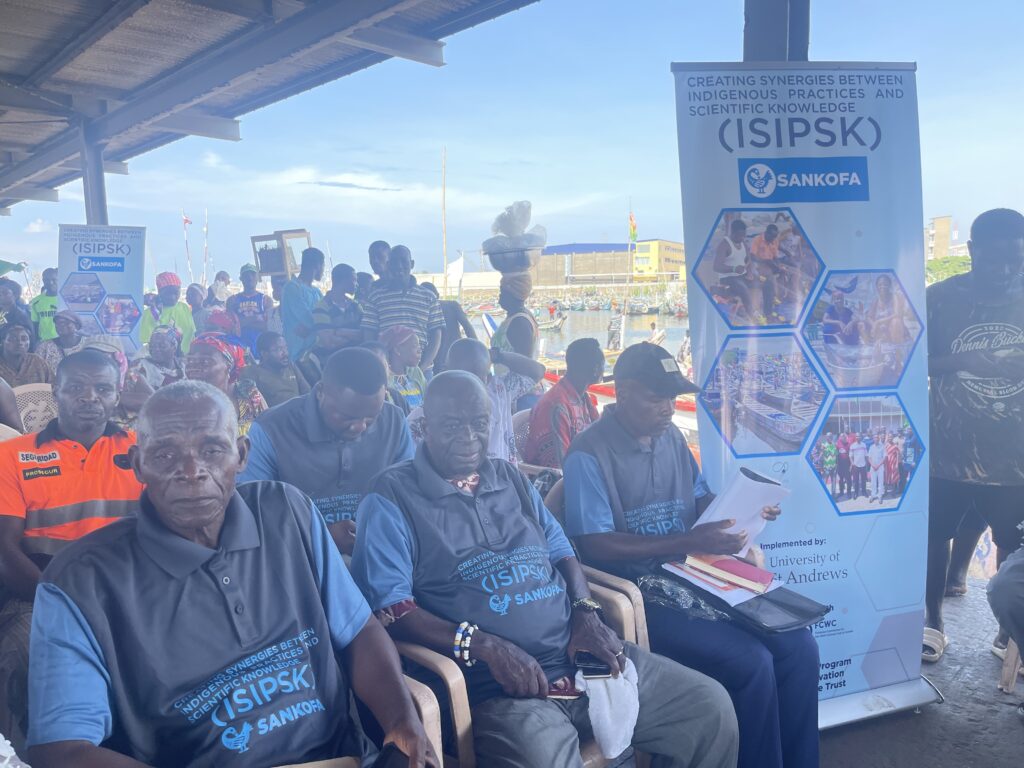
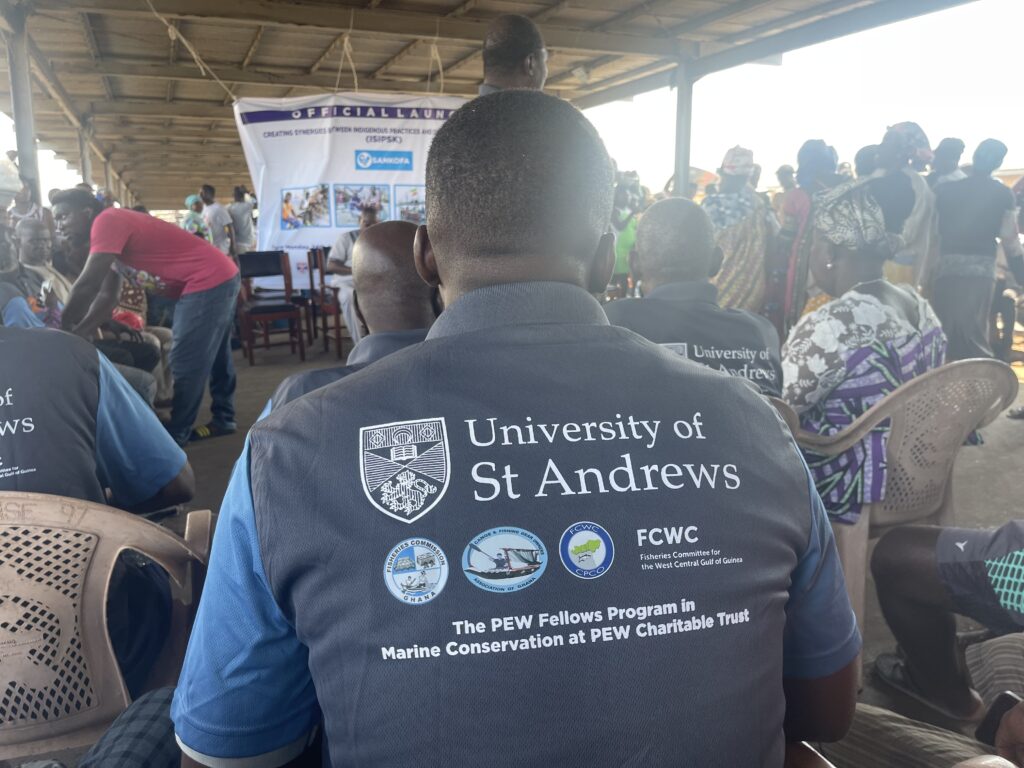
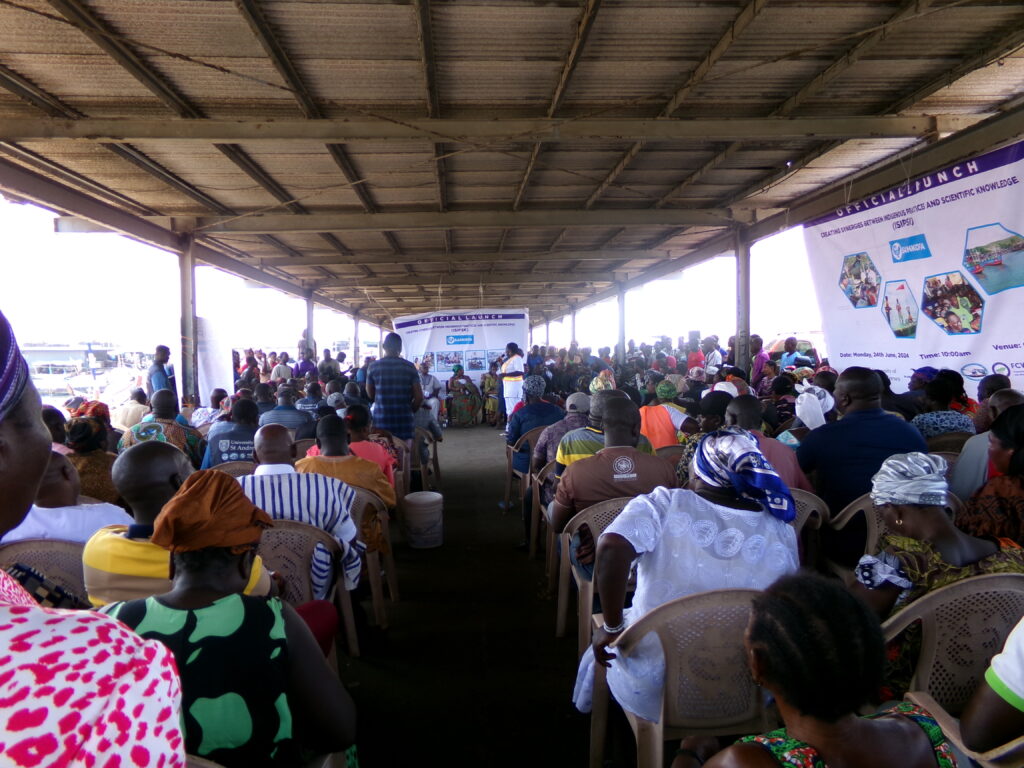
Solidarity messages from various stakeholders indicated a positive reception of the research project and its potential benefits.
- Representing the Ghana National Canoe Fishermen Council (GNCFC), Nii Adjeitey Mattor, the supporting Chief fisherman of Tema, in his solidarity message called for togetherness among fisherfolk irrespective of associations to support this research project and promote good fisheries governance and sustainable fisheries.
- The National Fish Processors and Traders Association (NAFPTA), in a solidarity statement delivered by Madam Mary Kai Drah, expressed appreciation to all for their support to the event. She advised women to continue supporting their family’s upkeep during the closure. She appealed to the canoe owners to support their crew during the closure. She noted her observation of child labour in fisheries and asked that it should be addressed. Finally, she encouraged all to take advantage of the closure to pay particular attention to their healthcare and personal well-being.
- Mr Desmond Sackey of NUTEG commended the use of local languages at the project launch and called for their extensive use to improve communication and understanding among fishers about issues in the sector.
- Mr Eric Atsiatome, representing Friends of the Nation (FoN), acknowledged the value of indigenous knowledge, recounting the use of stars for navigation mentioned by the chair. He said this research project seeking to complement scientific research with the rich understanding of local knowledge has come at an opportune time to improve sustainable fisheries in Ghana. He encouraged all to be involved and pledged the support of FoN for the success of this research.
- An admonition was given to fisherfolk by the stakeholder representatives through the MC, Mr Adjetey, to reduce plastic waste at sea by recycling the plastic water sachets taken along on fishing expeditions.
- In a statement delivered by Madam Georgina Dzorkpe on behalf of the Executive Director of the Westcoast Women Ambassadors (WWA), she relayed the organisation’s concerns about the declining state of fisheries. She urged all, especially at the grassroots levels, to embrace “inclusive collaboration” and act to address the impact of declining fisheries. She concluded by affirming the association’s support to the project.
- Centre for Maritime Laws Africa (CEMLAWS Africa), represented by Dr Rebecca Essamuah pledged support of CEMLAWS Africa’s to the project to achieve its objectives. She further thanked fishers for the collaboration during the recent gear audit exercise that CEMLAWS Africa and Fisheries Commission jointly undertook with support from the USAID GFRA project.
- EJF represented by Mrs Araba Ewua-Boateng in her solidarity message, expressed excitement for EJF be invited to support the event. She stressed the benefit of collaboration and asked that all should support this research investigating synergies between traditional knowledge with scientific knowledge to achieve the potential outcome of the research. She declared that EJF supports sustainable fisheries and is ready to contribute to the success of sustainable fisheries initiatives.
- Help Foundation Africa, represented by Mr Kyei Yamoah, commended the participation of CaFGOAG, as a fisherfolk groups with such a research project. He admonished that respective fisherfolk associations should unite to rebuild Ghana’s fisheries.

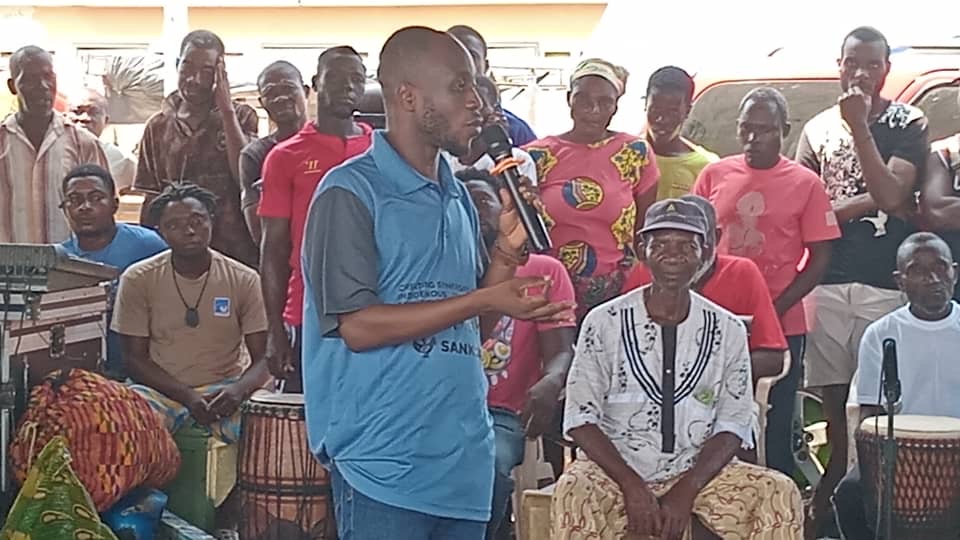

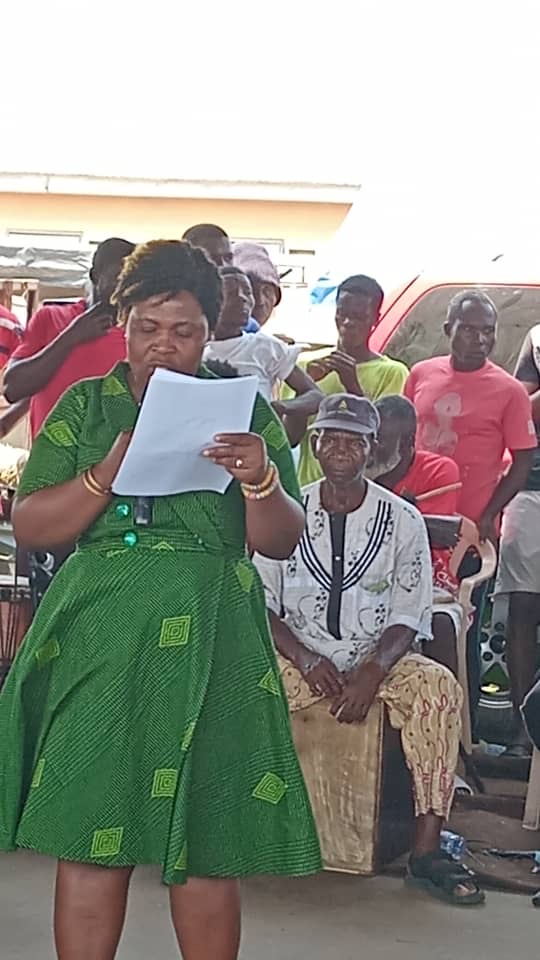


In her closing remarks, Manye Naa Afua, the co-chairperson and Queen mother of Tema, commended all for their support of the laudable intentions of the ISIPSK research project. In delivering the vote of thanks, Mrs Agnes Awatey of CaFGOAG expressed appreciation firstly to the University of St Andrews for the initiative, to the collaborating organisations, and to all stakeholder organisations and fisherfolk who made the event successful. The proceedings were brought to a close and musical interlude continued as participants were exchanged pleasantries.